Zinc supplementation is close to universal in immune-focused protocols, and at 15–30 mg per day for short periods it is reasonable. Sustained intake at 50 mg or more without copper, however, reliably produces copper deficiency — and copper deficiency presents as anemia, neutropenia, and neurological symptoms that are frequently misattributed to something else.
The two minerals share an absorption mechanism, which is why the ratio between them is the operative variable.
Contents(14 sections)
Key takeaways
Zinc and copper compete for intestinal absorption via metallothionein, which zinc induces and which binds copper preferentially.
A dietary ratio near 10:1 to 15:1 zinc to copper is the commonly cited target; sustained ratios above roughly 40:1 risk copper depletion.
Copper deficiency presents as microcytic or normocytic anemia unresponsive to iron, neutropenia, and myelopathy resembling B12 deficiency.
Serum copper and zinc are poor status markers; ceruloplasmin, alkaline phosphatase, and red cell superoxide dismutase add information.
Zinc above about 40 mg/day long term should include copper, or be time-limited.
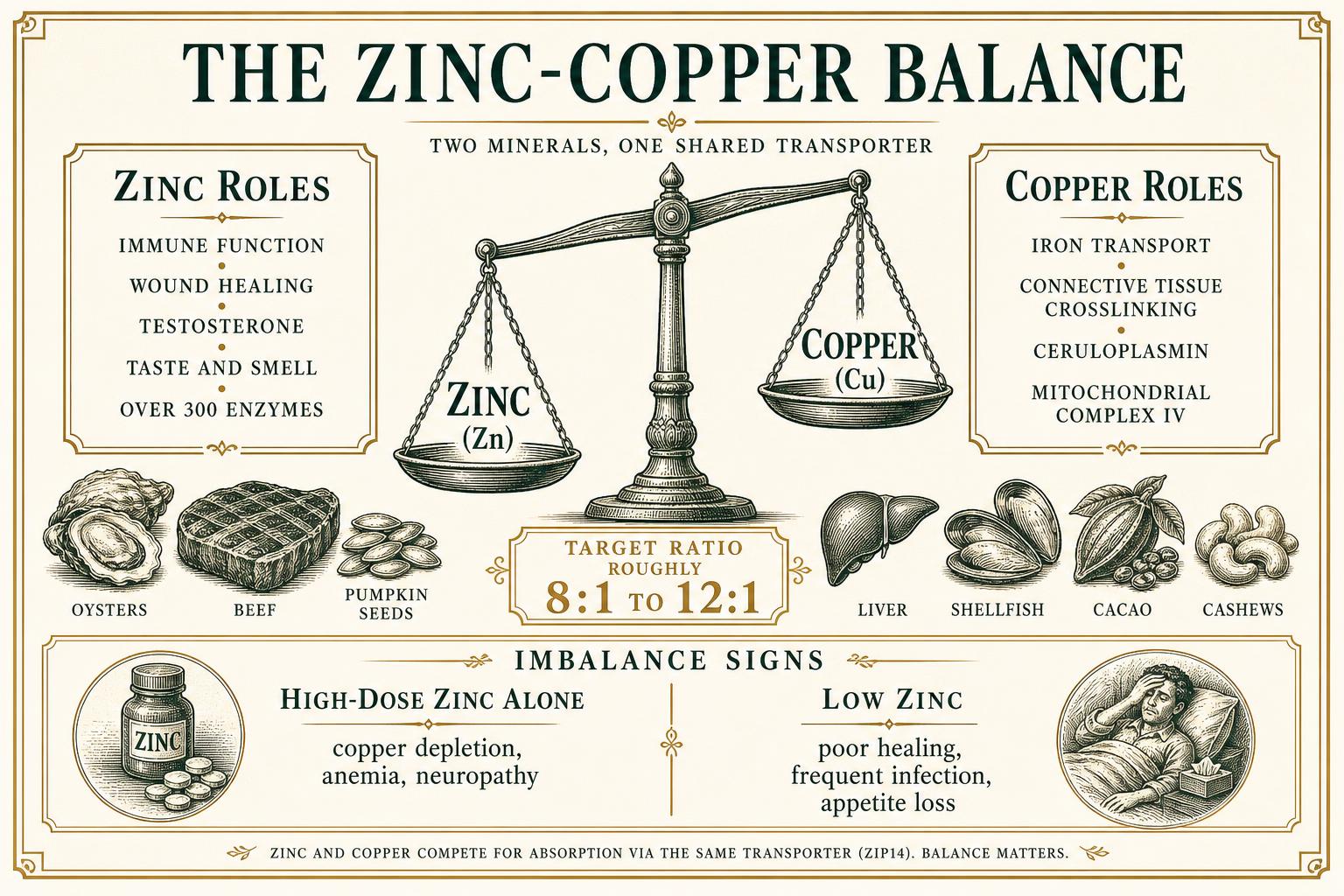
The Primer
What each mineral does
Zinc is a structural and catalytic cofactor in more than 300 enzymes, essential to immune cell function, wound healing, testosterone synthesis, taste and smell, and DNA repair. Copper is required for iron mobilization, connective tissue crosslinking, mitochondrial electron transport (cytochrome c oxidase), and the antioxidant enzyme superoxide dismutase.
Both are essential and both are toxic in excess. Neither is optional.
How the competition works
Zinc in the gut increases production of a binding protein called metallothionein. That protein binds copper more tightly than zinc, so copper gets trapped in the intestinal cell and shed rather than absorbed. High zinc therefore blocks copper uptake — a mechanism so reliable that zinc is used therapeutically to lower copper in Wilson's disease.
What copper deficiency looks like
Fatigue with anemia that does not respond to iron, low white cell counts, easy bruising, tingling or unsteady gait, loss of hair or skin pigment, and elevated cholesterol. Because the neurological picture resembles B12 deficiency, it is often missed.
Practical handling
Short courses of zinc at 15–30 mg for acute illness need no copper. Ongoing daily zinc above about 40 mg should include roughly 1–2 mg copper, and long-term use should be reviewed periodically. Food-based copper — shellfish, liver, dark chocolate, nuts, seeds — covers most needs without supplements.
Take zinc away from calcium, iron, and high-phytate meals, which reduce its absorption.
The Deep Dive
The metallothionein mechanism in detail
Intestinal metallothionein is transcriptionally induced by zinc via MTF-1 binding to metal response elements. Because metallothionein's binding affinity for Cu(I) exceeds that for Zn(II) by several orders of magnitude, elevated luminal zinc leads to copper sequestration in enterocytes that are then sloughed into the lumen. The result is a functional intestinal copper block that develops over weeks and is dose-dependent.
Copper is normally absorbed by CTR1 (SLC31A1) at the apical membrane and exported by ATP7A basolaterally; hepatic ATP7B loads copper onto ceruloplasmin for systemic distribution. Zinc-induced metallothionein intercepts copper before ATP7A export, which is why the deficiency is one of absorption rather than of dietary supply.
Tier II · Members only · Free
Continue into the deep dive
Tier I is free and always open. Tier II — the full mechanisms, dosing detail, nuance, and citations — unlocks with a free Vital Codex membership.
- Every Tier II deep dive across all hubs
- Saved reading progress across articles
- Member knowledge modules and their quizzes
- The Dispatch, if you opt in
Frequently asked
How much zinc is safe long term?
Up to about 40 mg/day from all sources is the established upper limit for adults, and that figure was set on copper-status grounds. Higher doses should be time-limited or paired with copper.
Should I supplement copper if I take zinc?
If zinc is above roughly 40 mg/day or continued for months, include 1–2 mg copper or ensure copper-rich food intake. Short courses do not need it.
Can I get enough copper from food?
Usually yes. Oysters, beef liver, dark chocolate, cashews, sesame seeds, and shiitake mushrooms are all dense sources; a single serving of liver exceeds daily needs several times over.
Does a blood test tell me my zinc status?
Not reliably on its own. Serum zinc drops with inflammation and after meals; interpret it alongside CRP and alkaline phosphatase, and weigh symptoms and intake history.
Continue exploring: Nutrition — Protein sufficiency, micronutrient density, and food quality.
Explore Nutrition