Iodine is the only nutrient whose atoms are physically incorporated into a hormone. Thyroxine is four iodine atoms bolted to a tyrosine scaffold; triiodothyronine is three. Without dietary iodine there is no thyroid hormone, and without thyroid hormone there is no normal metabolic rate, no normal fetal brain development, and no normal thermogenesis. That much is not controversial anywhere in medicine.
What is controversial is the dose. Conventional nutrition sets the adult requirement at 150 micrograms daily and the tolerable upper limit at 1,100 micrograms. A separate clinical tradition — Guy Abraham's "orthoiodosupplementation," carried forward most visibly by David Brownstein, MD — argues that whole-body iodine sufficiency requires 12.5 to 50 milligrams daily, roughly one hundred to three hundred times the RDA, on the grounds that the thyroid is only one of several iodine-hungry tissues and that modern bromide exposure has raised the requirement. Both camps cite real biology. The gap between them is one of the widest in nutritional medicine, and it is resolvable only by being precise about what each side is actually measuring.
Contents(23 sections)
Key takeaways
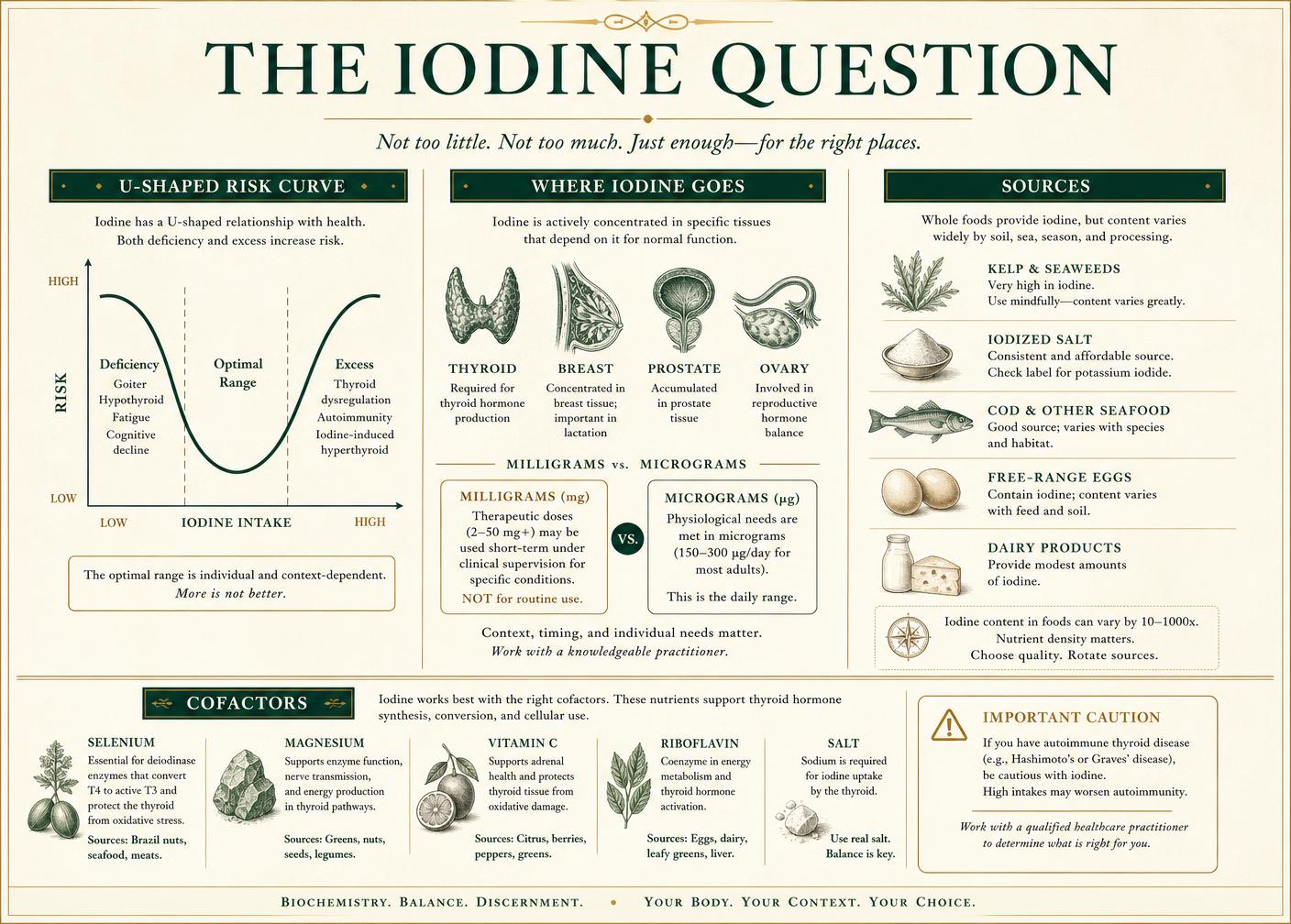
The adult requirement is 150 µg daily (220 µg pregnancy, 290 µg lactation). Iodine deficiency remains the world's leading preventable cause of intellectual disability.
Iodine has a genuinely U-shaped risk curve: deficiency and excess both cause goiter and hypothyroidism, by different mechanisms.
Selenium status determines whether added iodine is safe. Organification generates hydrogen peroxide that only selenoenzymes clear; iodine loading on low selenium is the mechanistic recipe for thyrocyte damage.
Extrathyroidal iodine is real — the sodium-iodide symporter is expressed in breast, salivary gland, gastric mucosa, and lactating tissue — but "this tissue transports iodide" does not establish "milligram dosing improves outcomes there."
High-dose protocols (12.5–50 mg) have clinical case series and a coherent rationale but no adequately powered randomized outcome trials. In TPO-antibody-positive people they measurably raise the risk of hypothyroidism.
Anyone with autoimmune thyroid disease, nodules, or prior radioiodine should treat milligram-level iodine as a supervised intervention, not a supplement.
The Primer
What iodine actually does
The thyroid is the only gland that concentrates a trace element against a steep electrochemical gradient in order to build its own product. The sodium-iodide symporter (NIS) pumps iodide from blood into the follicular cell at 20–50 times serum concentration. Thyroid peroxidase then oxidizes it and attaches it to tyrosine residues on thyroglobulin. Two iodinated tyrosines couple to form T4; a different pairing forms T3. The gland stores months of hormone inside colloid — a buffer that is why deficiency takes so long to declare itself.
Thyroid hormone then sets the resting metabolic rate of essentially every cell: heart rate, gut motility, heat production, mitochondrial density, lipid clearance, and — critically, during gestation and the first two years of life — neuronal migration and myelination.
The deficiency diseases
Iodine deficiency is not one disease. It is a graded spectrum, and the severity depends heavily on when in the lifespan the shortfall occurs.
- Goiter. The classic sign. Falling hormone output raises TSH, TSH drives follicular hyperplasia, and the gland enlarges to capture more iodide. Endemic goiter belts historically tracked glaciated and mountainous soils — the Alps, the Himalayas, the American Great Lakes and Appalachian "goiter belt."
- Hypothyroidism. Fatigue, cold intolerance, weight gain, constipation, dry skin, bradycardia, cognitive slowing.
- Cretinism. Severe maternal deficiency in early pregnancy produces irreversible neurological damage: intellectual disability, deaf-mutism, spastic diplegia, and stunting. This is the endpoint iodized salt programs were built to eliminate.
- Subclinical developmental loss. The larger public-health story. Meta-analyses of moderately deficient populations show a mean IQ deficit on the order of 12–13 points relative to iodine-sufficient peers — a population-wide loss that produces no visible individual disease.
- Obstetric outcomes. Deficiency is associated with higher rates of miscarriage, stillbirth, and low birth weight.
- Nodular disease. Chronically stimulated glands develop autonomous nodules, which is why long-standing deficiency areas see multinodular goiter and, on later iodine repletion, a wave of iodine-induced hyperthyroidism.
- Fibrocystic breast change. Breast tissue concentrates iodide, and rodent iodine-deficiency models produce ductal hyperplasia. Small human trials of molecular iodine have reported reduced breast pain and nodularity. This is the strongest of the extrathyroidal claims and is discussed properly in Tier 2.
Globally, salt iodization has been one of the most successful public-health interventions ever run — goiter prevalence has collapsed across most of the world since 1990. But sufficiency is not permanent. Iodized salt only helps if people eat it, and three modern trends have quietly eroded intake: the shift from iodized table salt to gourmet sea salt and Himalayan salt (largely non-iodized), the fact that roughly 70% of dietary sodium now comes from processed food made with non-iodized salt, and the decline of iodine-rich dairy and egg consumption in plant-forward diets. Mild deficiency has re-emerged in parts of Europe, Australia, and in pregnant women in the United States, where the median urinary iodine concentration in pregnancy has hovered near the lower boundary of adequacy.
Food sources, ranked and qualified
Iodine content in food is far more variable than standard tables admit. It depends on soil, seawater, feed, and processing.
| Source | Typical iodine | Notes |
|---|---|---|
| Kelp / kombu | 500–8,000+ µg per gram | Enormously variable; a single serving can exceed the upper limit many times over |
| Nori (sushi seaweed) | ~16–43 µg per sheet | The safe, predictable seaweed |
| Cod, haddock, pollock | 100–200 µg per 3 oz | White fish is the best whole-food source |
| Dairy (milk, yogurt) | 50–100 µg per cup | Comes largely from iodophor teat disinfectants and fortified feed, so it varies by region and farm |
| Free-range eggs | 20–30 µg each | Yolk-concentrated. Free-range birds on varied feed and soil deliver more consistent micronutrient density alongside better omega-3, vitamin D, and carotenoid content |
| Iodized salt | ~45–75 µg per gram | Loses potency with heat, humidity, and long storage; check the label, since most specialty salts are not iodized |
| Prunes, lima beans, potato skin | 10–20 µg per serving | Minor contributors |
| Shrimp, oysters | 30–90 µg per 3 oz | Reliable and modest |
A practical target of 150–250 µg daily is met by, for example, a cup of yogurt plus two free-range eggs, or one serving of cod, or nori a few times a week with iodized salt in home cooking.
Why thyroid dysfunction is common now: modern antagonists and terrain factors
Iodine deficiency is no longer the only relevant stressor. Several modern exposures compete with iodide at the sodium-iodide symporter, interfere with thyroid hormone synthesis or conversion, or raise the iodine requirement in ways that standard intake may not cover.
- Bromide. The most important historical competitor. Found in brominated flame retardants in furniture, electronics, and some textiles; brominated vegetable oil (BVO) in citrus and other sodas; and potassium bromate in commercial bread and flour. Bromide occupies NIS and renal iodide-handling sites, so the same iodine intake produces less thyroid uptake.
- Fluoride and chlorine. Both are halides. Fluoridated water and fluoride toothpaste at population doses have modest competitive effects on NIS in vitro; the practical concern is additive with other stressors. Chlorine and chloramine used to disinfect municipal water can form iodine-displacing byproducts and may directly interfere with thyroid uptake at high exposure. Filtering drinking water is a reasonable precaution.
- Perchlorate. A strong NIS competitor from rocket fuel, fireworks, and some fertilizers. Found in trace amounts in some leafy greens and drinking water. Alone the exposure is small; combined with nitrate and thiocyanate it meaningfully lowers iodide uptake.
- Soy isoflavones. Genistein and daidzein inhibit thyroid peroxidase and NIS, and can block T4-to-T3 conversion in some models. The effect is clinically relevant mainly when soy intake is high and iodine or selenium is marginal — infants on soy formula, adults replacing dairy with large amounts of soy, or vegan/vegetarian diets without iodized salt. Fermented soy and normal culinary amounts are less concerning than isolated soy protein or formula.
- Nitrates. High nitrate from well water or processed meats inhibits iodide uptake. Relevant mainly in agricultural areas with contaminated well water.
- Heavy metals. Cadmium, mercury, and lead interfere with thyroid peroxidase, deiodinase activity, and hormone transport. Mercury in particular can accumulate in the thyroid and alter selenium-dependent enzymes.
- PFAS and other persistent organic pollutants. PFOA, PFOS, and PCBs are associated with altered thyroid hormone levels in epidemiologic studies, likely through interference with hormone transport and receptor signaling.
- Endocrine-disrupting plastics and pesticides. Phthalates, BPA, and some organochlorine pesticides affect thyroid hormone signaling and may alter TSH response.
- Medications. Lithium, amiodarone, interferon-alpha, immune checkpoint inhibitors, and some antiepileptics are well-documented causes of thyroid dysfunction. Amiodarone is especially notable because it contains iodine itself.
- Nutritional cofactor depletion. Selenium-poor soils, zinc deficiency, low iron/ferritin, vitamin D insufficiency, and inadequate vitamin A all impair hormone synthesis, conversion, or receptor response. Modern refined diets and depleted soils raise the prevalence of these cofactor gaps.
- Gluten and molecular mimicry. Celiac disease and non-celiac gluten sensitivity are overrepresented in Hashimoto's populations. The mechanism is partly intestinal permeability and immune cross-reactivity; removing gluten does not cure autoimmunity but can lower antibody activity in responsive individuals.
- Chronic stress and poor sleep. Elevated cortisol and disrupted circadian rhythm suppress TSH, reduce T4-to-T3 conversion, and raise reverse T3. This is a conversion/transport problem, not an iodine shortage, and adding iodine will not fix it.
- Excess omega-6/seed oils. High linoleic acid intake promotes oxidative stress and membrane rigidity, indirectly burdening the selenoenzymes that protect the thyroid and drive deiodination.
- Radiation. Medical radiation to the head and neck, and historical fallout exposure, damage thyroid tissue and raise long-term dysfunction and cancer risk.
The practical implication: most people do not need milligram iodine to overcome these stressors. They need adequate baseline iodine, sufficient selenium and other cofactors, reduced halide and disruptor load, and — when autoimmunity is present — medical management rather than iodine escalation.
The supplement forms
- Potassium iodide (KI). Straight iodide. What most multivitamins and prenatal supplements contain, typically 150 µg. Efficiently absorbed and used by the thyroid.
- Iodine + selenium combinations. A conservative option for people whose diet lacks reliable iodine sources and who want selenium paired from the start. Designs for Health Iodine + Selenium (affiliate link) is an example; it is not a high-dose protocol and should still be matched to actual need and lab monitoring.
- Lugol's solution. 5% elemental iodine plus 10% potassium iodide in water. One drop of standard Lugol's delivers roughly 6.25 mg total iodine/iodide. Developed in 1829 and in routine medical use for over a century before it fell out of favor.
- Iodoral / tableted Lugol's. Standardized 12.5 mg or 50 mg tablets containing the same iodine-to-iodide ratio. Created to make Lugol's dosing reproducible.
- Nascent / atomic iodine. Marketing terminology without a distinct, verified pharmacology. Treat claims with skepticism.
- Molecular iodine (I₂). The specific form used in fibrocystic breast trials. Mechanistically distinct from iodide and the most defensible target for extrathyroidal use.
- Kelp tablets. Highly variable, sometimes contaminated with arsenic or heavy metals. Not a controlled dose.
- Povidone-iodine. Topical antiseptic. Systemically absorbed through broken skin and mucous membranes — a real and often unnoticed iodine load.
The cofactors nobody tests
Iodine is one input into a multi-nutrient assembly line, and a deficiency anywhere downstream produces the same symptoms as iodine shortage — which is why "I took iodine and nothing happened" is often a cofactor problem rather than a dose problem.
- Tyrosine. The amino-acid scaffold that iodine attaches to. Chronically low protein intake, restrictive dieting, or poor digestion limits substrate before iodine ever becomes limiting.
- Iron. Thyroid peroxidase is a heme enzyme. Iron deficiency lowers TPO activity directly, and iron-deficient women respond poorly to iodine repletion until iron is corrected.
- Selenium. Required to convert T4 to T3 and to clear the peroxide generated during organification.
- Riboflavin (B2) and niacin (B3). Feed the NADPH/FAD systems that the peroxide-generating and peroxide-clearing enzymes depend on.
- Vitamin C. Supports iodide transport and recycling and buffers the oxidative cost of hormone synthesis.
- Zinc and vitamin A. Required for nuclear thyroid-hormone receptor function — the last step, where T3 actually changes gene expression.
A useful clinical habit: when hypothyroid symptoms persist on adequate iodine, ask for ferritin, selenium, zinc, and vitamin D before raising the iodine dose.
"I'm allergic to iodine" — almost always false
This belief is common and it is nearly always a misunderstanding, and it matters because it causes people to avoid an essential nutrient for life.
You cannot be allergic to iodine in any meaningful sense: it is built into your own hormones, and a true immune response to it would be incompatible with normal development. What people actually react to is one of three other things — iodinated radiocontrast media used in CT scans (a reaction to the contrast molecule and its osmotic load, not to elemental iodine), povidone-iodine or another topical preparation (contact irritation or a reaction to an excipient), or shellfish, where the allergen is tropomyosin, a muscle protein, and has nothing to do with the iodine content of seafood.
None of these predicts a reaction to dietary iodine or to potassium iodide in a multivitamin. If a documented contrast reaction is on your chart, tell radiology — but do not let it become a reason to eat an iodine-deficient diet.
Iodized salt is less reliable than it looks
Salt iodization is the most successful public-health nutrition program in history, and it is also quietly leaky.
- Fortification levels are often out of spec. In one survey of 88 salt samples pulled from retail shelves, roughly half fell below the intended iodine fortification level.
- The concentration varies inside a single container. Iodine is added as a coating, not blended into the crystal, so it settles and separates; measured concentrations have varied by more than threefold between the top and the bottom of the same package.
- It degrades. Potassium iodide is volatile in the presence of heat, humidity, light, and time. An open shaker in a steamy kitchen loses iodine over months.
- Unrefined salts are not a substitute. Sea salt, Himalayan, Celtic, and most gourmet salts contain negligible iodine — a straight swap for "healthier" salt is an unintentional cut in iodine intake.
- Salt avoidance removed the delivery vehicle. Decades of blood-pressure messaging pushed people away from table salt, and processed-food sodium is usually non-iodized. The result is falling urinary iodine in several wealthy countries.
The practical read: use iodized salt at home if you use salt at all, store it closed and dry, and treat food sources or a 150 µg multivitamin as your actual baseline rather than assuming the shaker covers it.
Why intake fails even when the diet looks good
- Soil depletion. Iodine in topsoil was stripped by glaciation and is still leached by rainfall and irrigation; the historic goiter belts are precisely the glaciated and mountainous regions. Nitrogen-forward fertilization produces large, fast-growing crops without restoring trace minerals, and little manure is returned to most fields — so crop iodine tracks geology and farm practice more than variety.
- Malabsorption. Iodine, selenium, iron, and zinc are all absorbed across an intact small-intestinal surface. Celiac disease, non-celiac gluten reactivity, atrophic gastritis, low stomach acid, and post-surgical anatomy all reduce uptake. Gastric mucosa itself expresses the sodium-iodide symporter, so gut damage impairs iodine handling as well as absorption.
- Animal-food iodine has moved. Dairy iodine comes largely from iodine-supplemented cattle feed and iodophor teat sanitizers, so it swings with dairy practice by region and season; where A2 or raw milk is chosen for other reasons, its iodine content may simply be different, not deficient — check the rest of the diet rather than assuming.
- Tobacco smoke. Cigarette smoke delivers thiocyanate, a direct NIS competitor, and smoking is independently associated with larger goiters in iodine-deficient regions.
The Deep Dive
Organification, peroxide, and why selenium is not optional
Every molecule of thyroid hormone is built at the cost of a burst of hydrogen peroxide. DUOX2 generates it at the apical membrane so thyroid peroxidase can oxidize iodide. Glutathione peroxidase and thioredoxin reductase — both selenoproteins — clear it.
When iodide supply rises sharply and selenium is low, peroxide clearance lags. Thyrocytes take oxidative damage, thyroglobulin becomes more immunogenic (highly iodinated thyroglobulin exposes cryptic epitopes), and the immune system is offered antigens it did not previously see. This is not a theoretical objection: it is the accepted mechanistic bridge explaining why national iodization programs are consistently followed within 5–10 years by a rise in Hashimoto's incidence and TPO-antibody prevalence, even as goiter and cretinism collapse. The tradeoff is judged worth it at population level. It is a different calculation for an individual who is already antibody-positive.
Tier II · Members only · Free
Continue into the deep dive
Tier I is free and always open. Tier II — the full mechanisms, dosing detail, nuance, and citations — unlocks with a free Vital Codex membership.
- Every Tier II deep dive across all hubs
- Saved reading progress across articles
- Member knowledge modules and their quizzes
- The Dispatch, if you opt in
Frequently asked
How much iodine do I actually need?
150 µg daily for adults, 220 µg in pregnancy, and 290 µg while lactating. The tolerable upper limit for sustained intake is 1,100 µg daily. Most people eating dairy, free-range eggs, white fish, or iodized salt are adequate without supplementing.
Is Dr. Brownstein's 12.5–50 mg protocol safe?
It is safer in some people than others, and that distinction is the entire answer. The published risk data show iodine-induced hypothyroidism clustering in people with positive thyroid antibodies, nodules, or prior thyroid treatment. In that group, milligram dosing is a genuine hazard. In an antibody-negative, selenium-sufficient adult under clinician monitoring with repeat labs, a low-end trial is a defensible experiment. What is not defensible is starting 50 mg without knowing your antibody status.
Does iodine help fibrocystic breast disease?
This is the best-supported extrathyroidal use. Randomized and open trials of molecular iodine (I₂) at 3–6 mg daily reduced breast pain and nodularity with a dose-response relationship, supported by preclinical work on 6-iodolactone and PPARγ signalling. Note the specifics: molecular iodine, single-digit milligrams — not high-dose mixed iodine/iodide.
Should I use kelp as my iodine source?
No. Kelp iodine content ranges over three orders of magnitude between species and batches, and exceeding the upper limit by tens of times on a single serving is easy. Nori is the exception among seaweeds: roughly 16–43 µg per sheet, which is predictable and modest.
Why do national iodization programs increase Hashimoto's?
Highly iodinated thyroglobulin is more immunogenic, and organification of extra iodide generates more hydrogen peroxide for thyrocytes to clear. In people with genetic susceptibility — and particularly with marginal selenium — that combination accelerates autoimmune thyroiditis. Population-wide the tradeoff strongly favors iodization, because preventing cretinism outweighs a modest rise in a manageable autoimmune condition.
Do I need selenium with iodine?
Mechanistically, yes, and preferably before. Selenoenzymes clear the peroxide generated during hormone synthesis and drive T4-to-T3 conversion. Iodine loading on low selenium is the specific combination that damages thyroid tissue in both animal models and human observational data.
What is bromide detox and is it real?
Bromide competes with iodide at the sodium-iodide symporter and at renal reabsorption, so iodine loading does increase urinary bromide excretion — that part is measurable. What is not established is that the resulting symptoms (headache, metallic taste, acne, fog) represent beneficial clearance rather than early iodine-induced thyroid dysfunction, which presents almost identically. Labs, not symptoms, tell you which one is happening.
Can iodine reverse hypothyroidism?
Only where iodine deficiency is the cause. In iodine-sufficient countries the dominant cause of hypothyroidism is Hashimoto's autoimmunity, where iodine will not regenerate destroyed tissue and can accelerate the destruction. Establish the cause first: TSH, free T4, free T3, and antibodies.
Does a non-iodized salt like Himalayan or sea salt matter?
It can. Specialty salts contain negligible iodine, and if they replace iodized salt without any compensating dietary source, intake falls quietly. This is one reason mild deficiency has re-emerged in otherwise well-nourished populations.
I was told I'm allergic to iodine — can I still eat iodine-containing foods?
Almost certainly yes. A true allergy to iodine is not biologically coherent — it is inside your own thyroid hormones. Reactions attributed to "iodine allergy" are to iodinated CT contrast media, to topical povidone-iodine, or to shellfish (where the allergen is the muscle protein tropomyosin). None of them predicts a reaction to dietary iodine or potassium iodide. Report a documented contrast reaction to radiology, but do not restrict iodine in food on that basis.
Why does my TSH go up when I take high-dose iodine?
Because iodide loading transiently suppresses organification and the pituitary compensates by raising TSH, often well above the reference range while free T4 and free T3 remain normal. It is a response to the dose, not proof of thyroid failure — and it has led to people being put on thyroid hormone unnecessarily. Always pair TSH with free T4, free T3, and antibodies, and tell the ordering clinician what you are taking.
Can a skin patch test tell me if I'm iodine deficient?
No. Fade rate of iodine tincture on skin depends on evaporation, humidity, sweat, and body site, and has never been shown to correlate with iodine status. Use urinary iodine over repeated samples plus a full thyroid panel instead.
Do I need iodine if I never use salt?
You need it more, not less. Processed-food sodium is usually non-iodized and specialty salts contain almost none, so a salt-cautious diet removes the main fortification vehicle. Cover it with white fish, dairy, free-range eggs, a sheet of nori, or a multivitamin containing 150 µg.
Does soy damage the thyroid?
Soy isoflavones can inhibit thyroid peroxidase and iodide uptake, and may interfere with T4-to-T3 conversion. The effect is usually only clinically relevant when iodine or selenium intake is marginal, or when soy is the dominant protein source — soy formula, heavy isolated soy protein use, or a vegan diet without iodized salt. Fermented soy in normal culinary amounts is unlikely to be a problem in an iodine-sufficient adult.
Should I avoid chlorinated and fluoridated water?
Chlorine, chloramine, and fluoride are halide competitors at the sodium-iodide symporter. At typical municipal doses the individual effect is small, but they add to bromide, perchlorate, and nitrate exposure. A quality carbon or reverse-osmosis water filter is a reasonable, low-risk step for anyone concerned about thyroid health, especially if other iodine stressors are present.
What about cruciferous vegetables and goitrogens?
Raw cruciferous vegetables, cassava, millet, and sweet potatoes contain goitrogens that can interfere with iodine uptake. At normal intakes with sufficient iodine they are not a practical concern. Cooking reduces their activity substantially.
Research Notes & Sources(expand)
Zimmermann MB. "Iodine deficiency." Endocrine Reviews 2009;30(4):376–408 — the standard reference on deficiency disorders, developmental effects, and iodization programs.
Bürgi H. "Iodine excess." Best Practice & Research Clinical Endocrinology & Metabolism 2010;24(1):107–115 — Wolff-Chaikoff, escape failure, and Jod-Basedow.
Teng W, et al. "Effect of iodine intake on thyroid diseases in China." New England Journal of Medicine 2006;354:2783–2793 — the cohort data showing more-than-adequate iodine raising subclinical hypothyroidism, concentrated in antibody-positive subjects.
Laurberg P, et al. "Iodine intake as a determinant of thyroid disorders in populations." Best Practice & Research Clinical Endocrinology & Metabolism 2010;24(1):13–27.
Winther KH, et al. "Selenium in thyroid disorders — essential knowledge for clinicians." Nature Reviews Endocrinology 2020;16:165–176 — selenoenzyme biology and the antibody-lowering trial literature.
Ghent WR, Eskin BA, Low DA, Hill LP. "Iodine replacement in fibrocystic disease of the breast." Canadian Journal of Surgery 1993;36(5):453–460; and Kessler JH. "The effect of supraphysiologic levels of iodine on patients with cyclic mastalgia." The Breast Journal 2004;10(4):328–336 — the molecular iodine breast trials.
Aceves C, Anguiano B, Delgado G. "The extrathyronine actions of iodine as antioxidant, apoptotic, and differentiation factor in various tissues." Thyroid 2013;23(8):938–946 — the mechanistic foundation of the extrathyroidal argument, including 6-iodolactone and PPARγ.
Abraham GE. "The historical background of the iodine project." The Original Internist 2005 — the primary statement of the orthoiodosupplementation hypothesis and the iodine-loading test.
Brownstein D. Iodine: Why You Need It, Why You Can't Live Without It. Medical Alternatives Press — the clinical case-series basis for the high-dose protocol.
Leung AM, Braverman LE. "Consequences of excess iodine." Nature Reviews Endocrinology 2014;10:136–142 — the mainstream counterweight, summarizing iodine-induced thyroid dysfunction.
Pearce EN, Lazarus JH, Moreno-Reyes R, Zimmermann MB. "Consequences of iodine deficiency and excess in pregnant women." American Journal of Clinical Nutrition 2016;104(Suppl 3):918S–923S.
Bafna A, et al. / Ashby MT. "Inorganic chemistry of defensive peroxidases: iodide as a substrate and modulator of myeloperoxidase." Redox Biology 2019 — the frontier argument that iodide steers MPO output away from the chlorinating, atherogenic pathway.
Schwartz L, et al. "Iodine and iodized salt: fortification levels and stability in retail samples." Environmental Science & Technology — the survey finding roughly half of retail salt samples below intended fortification and threefold variation within a single package.
Zimmermann MB, Köhrle J. "The impact of iron and selenium deficiencies on iodine and thyroid metabolism." Thyroid 2002;12(10):867–878 — why TPO's heme requirement makes iron status a determinant of iodine response.
Panicker V, et al. "Iodine 'allergy' and iodinated contrast media." Clinical Radiology / American College of Radiology contrast manual — the basis for separating contrast and shellfish reactions from any response to dietary iodine.
Continue exploring: Hormones — Endocrine rhythm, cortisol regulation, and signaling health.
Explore Hormones