An oxymel is a preparation of honey and vinegar, used for centuries in herbal practice because it makes pungent botanicals palatable and gives them a shelf-stable, mildly acidic base. The modern household version — a tablespoon each of raw honey and unfiltered apple cider vinegar in water — persists because it is cheap, simple, and pleasant, not because it is potent medicine.
The interesting part is that both ingredients have real, measurable properties: acetic acid moderates post-meal glucose response, and raw honey carries antimicrobial activity that does not come from sugar alone. The honest framing is a traditional whole-food tonic with plausible supporting roles, not a therapy.
Contents(16 sections)
Key takeaways
An oxymel is simply honey plus vinegar, historically used as a delivery base for aromatic and pungent herbs.
Acetic acid in vinegar has been studied for blunting post-meal glucose excursions; the effect is modest and real, not a substitute for glycemic management.
Honey's antimicrobial activity comes from hydrogen peroxide generation, low pH, low water activity, phenolics, and in some honeys methylglyoxal.
"With the mother" signals raw, unfiltered fermentation — it is a cellulose and acetic-acid-bacteria matrix, not a probiotic culture.
Two hard safety limits: never give raw honey to infants under 12 months, and never drink vinegar undiluted.
The Primer
What "oxymel" means
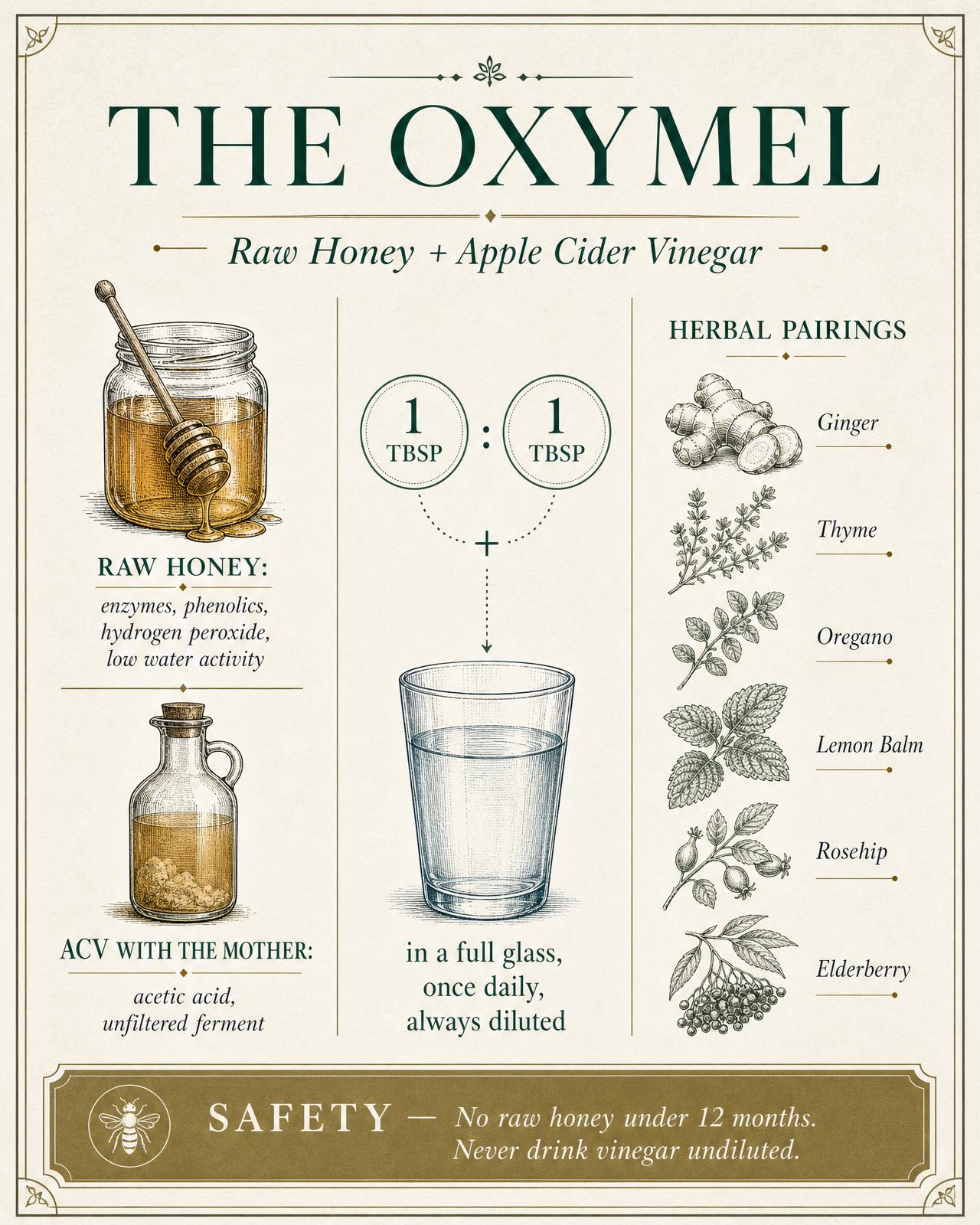
Oxymel is a traditional preparation made from honey and vinegar. The pairing endured in herbal practice because it does two things at once: it tastes good enough to take daily, and the acidic, sugar-dense base is stable at room temperature. In modern use, the most common version blends raw honey with apple cider vinegar, often with herbs added.
Why raw honey and ACV with the mother
Raw honey retains naturally occurring enzymes and protective compounds that are reduced when honey is heavily filtered or heated. Apple cider vinegar "with the mother" is preferred because the cloudy strands and sediment are visible signs of natural fermentation — the vinegar is less refined and closer to its traditional state.
The mother is not the same thing as a probiotic supplement. It is a living fermentation matrix, mostly cellulose and acetic-acid-producing bacteria. It is a quality marker, not a dose of beneficial organisms.
Traditional uses people still value
An oxymel is most often taken before meals or as part of a morning routine. It also shows up during seasonal transitions and as a base for herbal preparations made with ginger, thyme, lemon balm, oregano, rosehip, tulsi, or elderberry.
Where research interest sits: digestion, post-meal blood sugar response, and antimicrobial activity. Vinegar has been studied for moderating glucose response after starchy meals; honey continues to attract attention for broad-spectrum antimicrobial and antioxidant properties.
A simple way to use it
Stir 1 tablespoon of raw apple cider vinegar and 1 tablespoon of raw honey into a full glass of water. Drink once daily, or before a meal. Warm water works, and lemon or herbs are optional. The vinegar should always be diluted — never taken straight.
Safety notes
Raw honey should never be given to infants under 12 months, because of the established risk of infant botulism. Apple cider vinegar is acidic and must be diluted to reduce throat irritation and tooth enamel erosion; rinsing with plain water afterward helps.
People with reflux, ulcers, or a sensitive stomach may find acidic preparations irritating. Anyone managing blood sugar with medication should use extra care, since vinegar can affect post-meal glucose and stack with drug effects. Moderation is the sensible default.
The Deep Dive
The traditional logic of oxymel
Oxymels endured because vinegar and honey do different jobs simultaneously. Vinegar contributes acidity and acts as a solvent for certain plant compounds — alkaloids and some mineral fractions extract better in an acidic medium than in water alone. Honey improves taste, adds demulcent soothing quality, and contributes its own biologically active components.
That balance makes oxymels especially useful for herbs that are aromatic, pungent, or unpleasant on their own. Historically they cluster around digestive support, throat comfort, and seasonal formulas, usually paired with warming or aromatic botanicals.
Tier II · Members only · Free
Continue into the deep dive
Tier I is free and always open. Tier II — the full mechanisms, dosing detail, nuance, and citations — unlocks with a free Vital Codex membership.
- Every Tier II deep dive across all hubs
- Saved reading progress across articles
- Member knowledge modules and their quizzes
- The Dispatch, if you opt in
Frequently asked
Is an oxymel the same as drinking apple cider vinegar?
No. An oxymel is honey plus vinegar, usually diluted and often herb-infused. Plain diluted ACV is one ingredient of it. If your interest is specifically post-meal glucose, plain diluted vinegar is the more direct version, since honey adds sugar.
Does apple cider vinegar need to have the mother?
Not for the acetic acid effects — those come from the acid itself, which any vinegar has. The mother matters as a marker of raw, unfiltered processing, which retains more fermentation compounds and polyphenols. It is a quality signal, not a probiotic dose.
How much should I take, and when?
A common pattern is 1 tablespoon each of vinegar and honey in a full glass of water, once daily, before a meal. Always dilute. More is not better — higher acid loads mostly increase the risk of enamel erosion and throat or stomach irritation.
Who should avoid it?
Infants under 12 months must not have raw honey, due to botulism risk. People with reflux, gastritis, or ulcers often find acidic tonics irritating. Anyone on glucose-lowering medication, or on drugs affected by gastric emptying, should check with a clinician before making it a daily habit.
Can I make my own herbal oxymel safely?
Yes, with dried herbs, a clean jar, herbs kept fully submerged, and a cool dark storage spot. Dried material limits moisture and spoilage risk. Discard anything that smells off, grows surface mold above the liquid line, or was made with fresh herbs left partly exposed.
Continue exploring: Nutrition — Protein sufficiency, micronutrient density, and food quality.
Explore Nutrition