By age 75, nearly half of adults have clinically significant hearing loss — and most do nothing about it for a decade. That delay carries a cost far beyond missed conversation: untreated hearing loss is the single largest modifiable risk factor for dementia identified by the Lancet Commission, accounting for an estimated 7–8% of all dementia cases worldwide. The good news is that age-related hearing loss (presbycusis) is not purely mechanical wear. It is driven by the same forces this publication tracks everywhere else — microvascular decline, mitochondrial dysfunction, and chronic inflammation — which means it is partly preventable, partly slowable, and highly treatable.
Treating hearing loss in midlife may be the single most powerful dementia-prevention step most people never take.
Contents(3 sections)
Key takeaways
Presbycusis affects about one in three adults aged 65–74 and nearly half of those over 75.
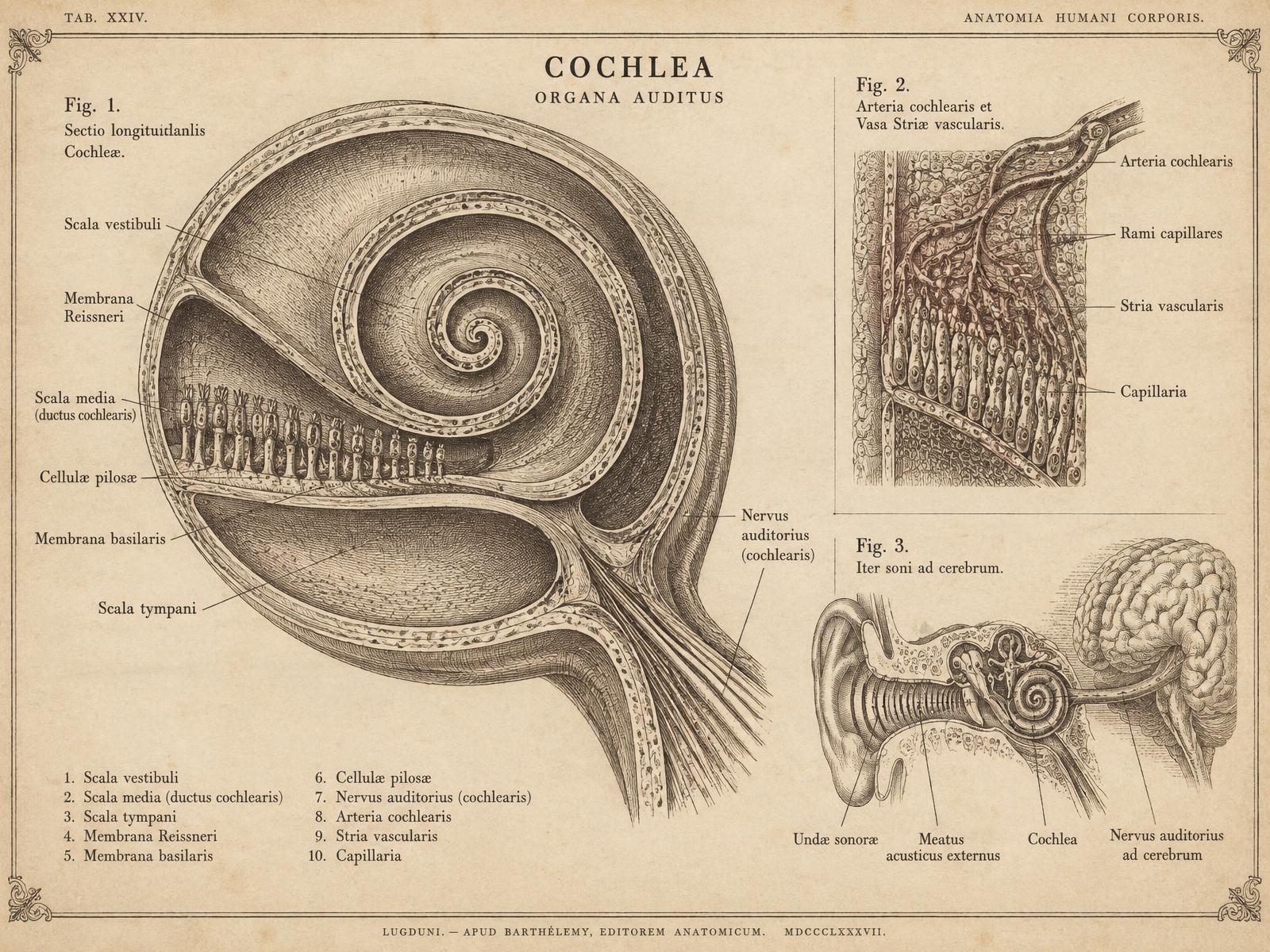
The cochlea has no collateral blood supply; its hair cells are among the most metabolically demanding cells in the body and cannot regenerate in humans.
Untreated hearing loss is the largest modifiable dementia risk factor — the ACHIEVE trial showed hearing aids cut cognitive decline by 48% in at-risk older adults.
Four overlapping subtypes exist: sensory (hair cell loss), neural (nerve degeneration), metabolic/strial (blood-supply failure), and mechanical (stiffening of inner-ear structures).
Noise exposure is cumulative and synergistic with age; protect your ears at any age.
Cardiovascular fitness, blood pressure control, and blood sugar management all protect the cochlea's delicate microvasculature.
Frontier research is dismantling the "hair cells never regrow" dogma: senolytics (dasatinib + quercetin) delayed cochlear aging in 2025 animal studies, and AAV gene therapies are already restoring hearing in children.
Traditional Chinese Medicine's kidney–ear axis offers serious allies: ginkgo biloba, the rehmannia–cuscuta pair, Corni Fructus, and the Gushen Pian formula (42% vs 19% effective rate vs placebo in a Phase II deafness trial).
Hearing aids work best when fitted early, before the brain's auditory pathways reorganize.
The Primer
Frequently asked
Can hearing loss be reversed?
Established age-related hearing loss cannot be reversed — lost hair cells do not regrow in humans. But progression can be slowed, function can be restored with hearing technology, and sudden hearing loss (a medical emergency) is sometimes reversible if treated within days.
How does hearing loss cause dementia?
Three pathways: the brain diverts resources to decoding degraded sound (cognitive load), auditory brain regions atrophy from lack of stimulation, and social withdrawal removes protective cognitive engagement. Treating hearing loss addresses all three.
Are cheap over-the-counter hearing aids worth trying?
For mild-to-moderate loss, FDA-regulated OTC hearing aids (available in the US since 2022) can be a reasonable, affordable start. For anything beyond moderate loss, or if speech understanding is poor, see an audiologist.
Does ginkgo biloba actually help hearing?
Not for reversing age-related loss. The best evidence is for tinnitus and as an add-on to standard treatment for sudden hearing loss. If you trial it, use a standardized extract (EGb 761, 120–240 mg/day) for about three months, and avoid it if you take blood thinners.
What foods protect hearing?
Patterns matter more than single foods: Mediterranean-style diets rich in fish, olive oil, vegetables, and legumes are associated with lower hearing-loss risk. Adequate B12, folate, omega-3s, and magnesium all have supporting evidence.
When is hearing loss an emergency?
Sudden hearing loss in one ear over hours to days is a medical emergency. Steroid treatment within the first one to two weeks substantially improves recovery odds. Do not wait to "see if it comes back."
Continue exploring: Cognition — Neurogenesis, synaptic plasticity, and focus architecture.
Explore CognitionThe Codex Dispatch
More on Cognition, one email a week
One considered email each Sunday: research translation, no hype, no supplement pitches. Separate from membership — unsubscribe anytime.