A useful hearing-care plan has six parts: test your hearing, protect it from noise, support your circulation, eat well, use hearing help early, and choose any extra remedies carefully. These steps can make conversation easier, reduce avoidable harm, and support everyday independence. They do not promise to regrow damaged inner-ear cells or cure every cause of hearing loss.
This is the practical companion to Hearing Loss After 60: What Fails, Why It Matters for Your Brain, and What Actually Helps. You do not need to understand the inner ear's biology to get started.
Do not use this plan for sudden hearing loss. A noticeable drop over hours or days—especially in one ear—needs urgent medical assessment, even if it feels like a blocked ear. Do not wait for a supplement, appointment reminder, or home remedy to work. NIDCD explains why sudden deafness is a medical emergency.
Contents(10 sections)
Key takeaways
Start with a hearing test, not a guess about whether your ears are “just getting old.”
Noise protection and useful hearing aids do different jobs: one reduces harm, the other helps you hear.
Movement, smoking cessation, and appropriate blood pressure and diabetes care support the circulation your ears depend on.
Food comes first; supplements are not a replacement for ear protection or an assessment.
Herbal traditions deserve thoughtful consideration, but a remedy's history or laboratory effects do not guarantee that it will improve your hearing.
The Primer
1. Test: find out what you are hearing
Book a hearing assessment if you often ask people to repeat themselves, struggle in restaurants, turn the television up, or notice ringing. Do not wait for hearing loss to become severe. A baseline test around age 60 can be a useful discussion with your clinician; earlier testing makes sense when symptoms, noise exposure, or a medical concern are present.
An audiogram is simply a chart showing which pitches and volumes you can hear. Ask about understanding speech as well as hearing beeps. A clinician can also check for wax, infection, or another treatable problem. A phone screening may flag a concern, but it does not replace a full assessment.
Your next action: write down two listening situations that are difficult and take the list to your appointment. Ask when to repeat testing; the right interval depends on your findings and risks, not a universal calendar.
2. Protect: turn down the noise reaching your ears
Use well-fitted earplugs or earmuffs around power tools, concerts, and other loud settings. Move away from speakers and take quiet breaks. If you have to raise your voice to talk to someone nearby, take that as a warning—not a precise sound measurement.
Around 85 dBA, exposure duration becomes important: the NIOSH workplace recommendation allows eight hours at that level and halves the time for each additional 3 dB. This is a workplace exposure limit, not a guarantee of zero risk for every listener. Louder sound can cause damage much faster. NIOSH noise guidance explains the relationship.
For headphones, keeping volume below roughly 60% is a useful starting reminder, not a safety certificate: devices and recordings differ. Use sound-exposure tracking or volume limits when available, shorten listening time, and choose a comfortable fit so you do not have to overpower background noise. Noise cancellation is not a substitute for rated hearing protection around machinery.
Your next action: keep ear protection wherever you need it—beside the lawn mower, in your concert bag, or at work.
3. Support circulation: look after the blood flow feeding your ears
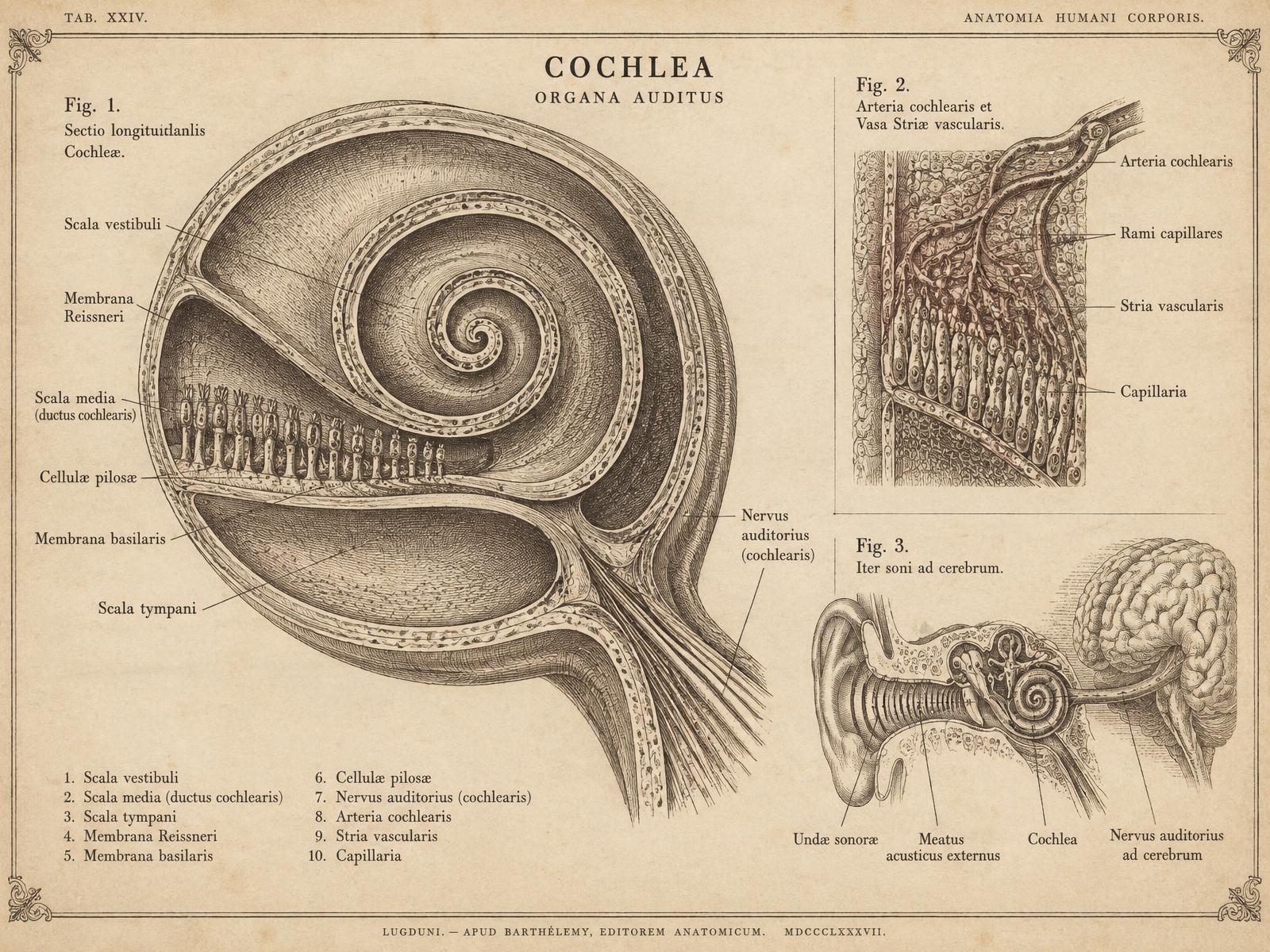
The inner ear needs a steady supply of oxygen and nutrients. The same habits that care for your heart also support the blood vessels serving your ears, although they cannot reverse established hearing loss.
Choose movement you can repeat: walking, cycling, swimming, or another activity suited to your health. If you smoke, ask for help stopping. Keep up with blood pressure checks and diabetes care when relevant. Do not change prescribed medicines on your own; instead, ask a clinician or pharmacist whether any could affect hearing.
Your next action: pair a manageable walk with a habit you already have, and check whether your blood pressure or diabetes review is due.
4. Nourish: build the food pattern before buying supplements
Aim for regular meals with vegetables, beans or lentils, adequate protein, whole grains where suitable, and fish or other appropriate sources of healthy fats. A Mediterranean-style pattern is a reasonable foundation for general cardiovascular health; observational links with hearing do not prove that a particular food prevents deafness.
B12 and folate matter when intake is inadequate or a deficiency is present. Ask about testing if your diet, symptoms, or medical history give a reason. Extra vitamins do not automatically improve hearing when levels are already adequate.
Omega-3s and magnesium appear in hearing-support research, but neither is a proven general treatment for age-related loss. Magnesium is not permission to tolerate damaging noise. Check supplements with a clinician, especially with kidney disease or medicines that may interact.
Your next action: improve one repeatable meal before adding a new bottle to the cupboard.
5. Amplify early: accept help when conversation is getting harder
If an audiologist recommends hearing aids, consider trying them rather than waiting until you cannot follow conversation. A good fit includes adjustment, practice, and follow-up—not just buying a device. Tell the provider where you struggle most, such as family dinners, phone calls, or meetings.
In the ACHIEVE trial01406-X/fulltext), a hearing intervention did not reduce cognitive decline across the entire study population over three years. It did slow decline in a prespecified subgroup of older adults at higher risk. That is encouraging, but it does not mean hearing aids prevent dementia in everyone.
In the United States, FDA-regulated over-the-counter hearing aids are for adults with perceived mild-to-moderate hearing loss. Significant difficulty, one-sided symptoms, pain, drainage, or sudden changes call for professional assessment. FDA hearing-aid guidance describes who these devices are for.
Your next action: ask about a fitting, follow-up support, and trial or return terms. At home, reduce background noise and face the person speaking; these changes help even before a device arrives.
6. Consider extras carefully: give herbal support a clear place
Traditional approaches—including the Chinese medicine kidney–ear framework—offer a long history of hearing and tinnitus care. The main guide discusses ginkgo, rehmannia-based formulas, and other herbal allies in more detail. They belong alongside assessment and hearing support, not in place of them.
Ginkgo is often proposed for ringing in the ears. Evidence for benefit in tinnitus is uncertain, and it has not been shown to restore age-related hearing loss. Laboratory findings about circulation do not settle whether a person will notice improvement. NCCIH's ginkgo review covers both the evidence and safety concerns.
If you and a qualified clinician decide to try an adjunct, agree on one goal—such as less troublesome ringing—and a review point, for example around three months. Keep a brief record and stop if it does not help or causes adverse effects. Extracts are not interchangeable, and multi-herb formulas need an interaction and quality check too.
Ginkgo can increase bleeding risk, particularly with blood thinners. Discuss it before use if you take medicines affecting clotting or have surgery planned. Do not put oils or herbal preparations into your ear unless a clinician has specifically advised it.
Your next action: take your full medicine and supplement list to a pharmacist or clinician before adding an herbal product.
Your six-step reminder
- Test: arrange an assessment and record what is difficult.
- Protect: keep ear protection handy and reduce loud listening.
- Support circulation: move regularly and stay on top of cardiovascular care.
- Nourish: improve meals and address deficiencies when indicated.
- Amplify early: explore properly supported hearing aids when recommended.
- Choose extras carefully: check evidence, interactions, and whether they actually help.
For the mechanisms, research frontier, and traditional herbal context, return to the complete hearing-loss guide.
Frequently asked
Can this plan bring my hearing back?
It cannot promise that. Wax and some other causes are treatable; established inner-ear damage usually cannot be reversed with lifestyle measures. Hearing aids can improve access to sound, while protection reduces further avoidable noise exposure.
Do I need to wait until age 60 for a hearing test?
No. Symptoms, a sudden change, noise exposure, or a medical concern are reasons to seek help earlier. Age 60 is a possible baseline discussion, not an eligibility rule.
Is 60% headphone volume always safe?
No. Output varies by device and recording, and time matters too. Treat it as a reminder to turn sound down, not a guaranteed safe limit; use exposure tracking and shorter listening sessions where possible.
Should I take ginkgo or magnesium before trying hearing aids?
No supplement should delay a hearing assessment or recommended hearing support. Ginkgo's tinnitus benefits are uncertain and it may increase bleeding risk; magnesium is not a proven treatment for age-related hearing loss.
What should I do if one ear suddenly goes quiet?
Seek urgent medical assessment immediately. Sudden hearing loss can feel like blockage, but waiting for it to clear can delay time-sensitive treatment.
Research Notes & Sources(expand)
This is general education, not a personalized prescription. The six steps translate the companion guide into daily actions; their evidence differs, and no single “hearing stack” is established to reverse age-related loss.
- NIDCD. Age-Related Hearing Loss — assessment and hearing support.
- NIDCD. Sudden Deafness — urgent assessment.
- NIOSH. About Noise and Hearing Loss — noise dose and prevention.
- WHO. Deafness and hearing loss: safe listening — volume, duration, and listening habits.
- Lin FR et al. ACHIEVE randomized trial01406-X/fulltext). The Lancet. 2023 — overall and subgroup cognitive outcomes.
- FDA. Over-the-Counter Hearing Aids — intended users and precautions.
- NCCIH. Ginkgo — evidence limits and interactions.
Continue exploring: Cognition — Neurogenesis, synaptic plasticity, and focus architecture.
Explore CognitionThe Codex Dispatch
More on Cognition, one email a week
One considered email each Sunday: research translation, no hype, no supplement pitches. Separate from membership — unsubscribe anytime.