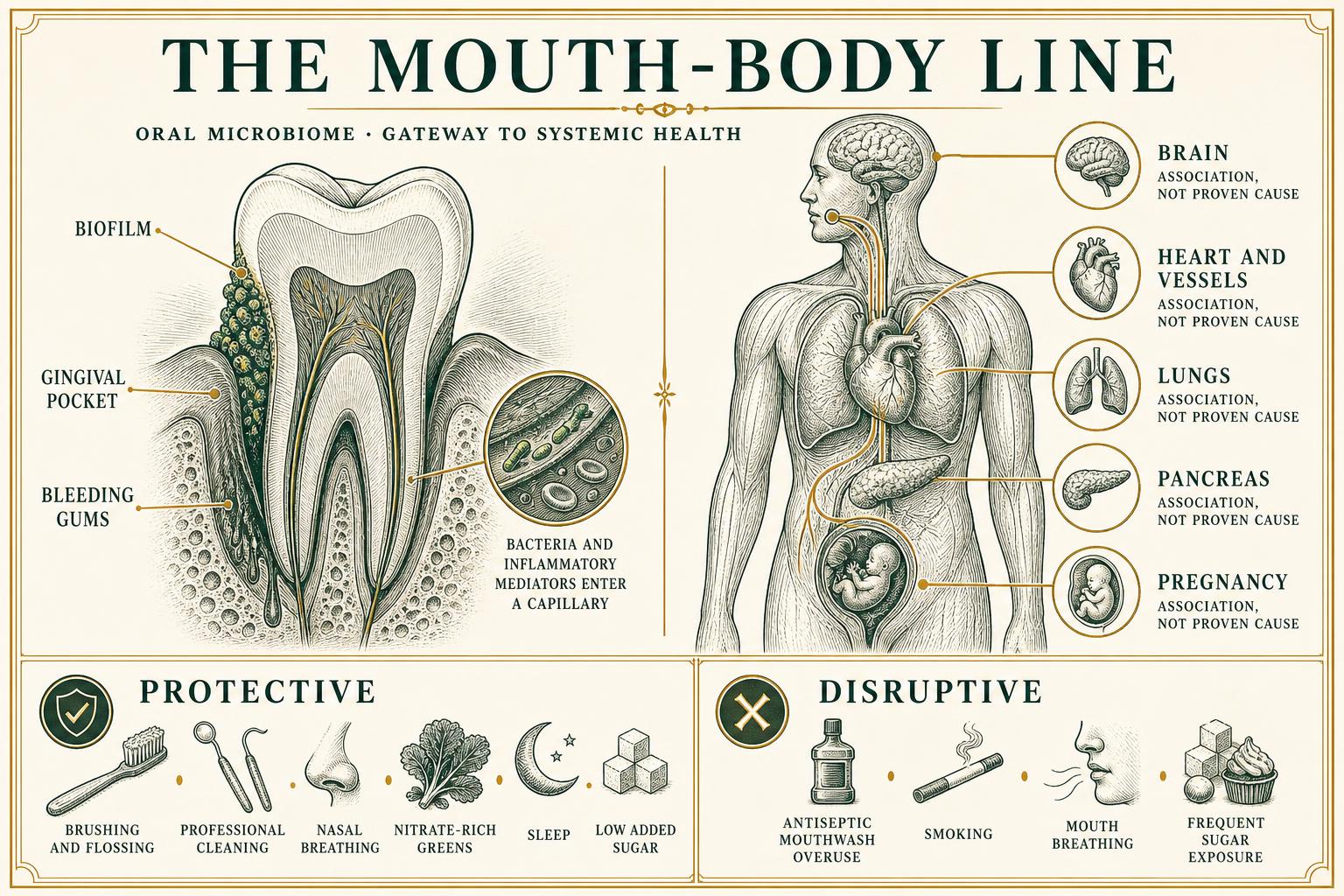
The mouth hosts roughly 700 bacterial species and is the only site where a biofilm sits in permanent contact with a breachable vascular surface. When that biofilm shifts toward pathogenic species and the gum barrier ulcerates, oral bacteria and their inflammatory products enter systemic circulation daily.
This is why periodontitis now appears in cardiovascular, diabetes, and dementia literature. The association is strong and mechanistically coherent; the causal claims are stronger for some endpoints than others, and the distinction matters.
Contents(13 sections)
Key takeaways
Severe periodontitis affects roughly 19% of adults worldwide, making it one of the most prevalent chronic inflammatory conditions.
Porphyromonas gingivalis has been recovered from atherosclerotic plaque and its gingipain proteases identified in Alzheimer's brain tissue (Dominy et al., Science Advances, 2019).
Periodontal treatment produces measurable HbA1c reduction in type 2 diabetes — roughly 0.3–0.4 percentage points at 3–6 months in meta-analysis.
The oral nitrate-reducing bacteria convert dietary nitrate to nitrite, the first step in the nitric oxide pathway; antiseptic mouthwash disrupts it and raises blood pressure in trials.
Bleeding gums are not normal. They are an open vascular interface, and the single most actionable signal in this domain.
The Primer
What the oral microbiome does
A healthy mouth is not a sterile mouth. Commensal species occupy attachment sites, produce antimicrobial compounds, help buffer acid, and — importantly — reduce dietary nitrate to nitrite, which the body converts downstream to nitric oxide. Nitric oxide governs vascular tone, so the oral microbiome participates directly in blood pressure regulation.
Dysbiosis occurs when the community shifts toward anaerobic, protease-producing species that thrive in inflamed pockets. The resulting cycle is self-reinforcing: inflammation deepens the pocket, the deeper pocket favors anaerobes, and the anaerobes intensify inflammation.
The signals worth reading
Bleeding when brushing or flossing indicates ulcerated tissue, not vigorous technique. Persistent bad breath usually reflects anaerobic protein degradation producing volatile sulfur compounds. Receding gums, tooth mobility, and changes in bite alignment indicate attachment loss. Chronic dry mouth removes saliva's buffering and antimicrobial function and accelerates everything above.
What actually changes the terrain
Mechanical disruption of biofilm twice daily, interdental cleaning, professional debridement when pockets have formed, adequate hydration and saliva flow, reduced free-sugar frequency, and — for anyone with periodontal disease — treatment rather than monitoring. Tobacco is the strongest modifiable risk factor after plaque itself.
The Deep Dive
How oral bacteria reach systemic tissue
Two routes operate. Direct bacteremia occurs during chewing and brushing across ulcerated periodontal epithelium; transient bacteremia after routine oral hygiene has been documented repeatedly. Indirect signaling occurs through lipopolysaccharide and cytokines — IL-1β, IL-6, TNF-α, and prostaglandin E2 — generated in periodontal tissue and released into circulation, raising hepatic C-reactive protein production.
The surface area involved is easy to underestimate. Advanced periodontitis across a full dentition presents an ulcerated area comparable to a sizable skin wound, continuously exposed to a dense bacterial biofilm.
Tier II · Members only · Free
Continue into the deep dive
Tier I is free and always open. Tier II — the full mechanisms, dosing detail, nuance, and citations — unlocks with a free Vital Codex membership.
- Every Tier II deep dive across all hubs
- Saved reading progress across articles
- Member knowledge modules and their quizzes
- The Dispatch, if you opt in
Frequently asked
Does flossing actually help?
Trial evidence for flossing against hard endpoints is weak mainly because the trials are small and short. Interdental cleaning reduces gingival inflammation and reaches surfaces brushing does not; interdental brushes outperform floss where spacing allows.
Should I stop using mouthwash?
Stop using broad-spectrum antiseptic rinses as an indefinite daily habit, particularly if blood pressure is a concern. Short therapeutic courses and post-surgical use remain appropriate.
Can treating my gums improve my blood sugar?
In type 2 diabetes with periodontitis, yes — meta-analyses show a modest but real HbA1c reduction after periodontal therapy.
Is bleeding when I brush normal?
No. It indicates inflamed, ulcerated tissue and warrants a periodontal evaluation rather than gentler brushing.
Continue exploring: Inflammation — Cytokine signaling and chronic low-grade systemic stress.
Explore Inflammation