The intestinal lining is one cell thick. Behind that layer sits the largest concentration of immune tissue in the body, and in front of it sits a dense microbial community. The barrier's job is selective: absorb nutrients, exclude bacterial fragments and undigested proteins.
Intestinal permeability is a measurable, regulated physiological variable — not a binary condition. Understanding it that way separates the credible science from the marketing built on top of it.
Contents(13 sections)
Key takeaways
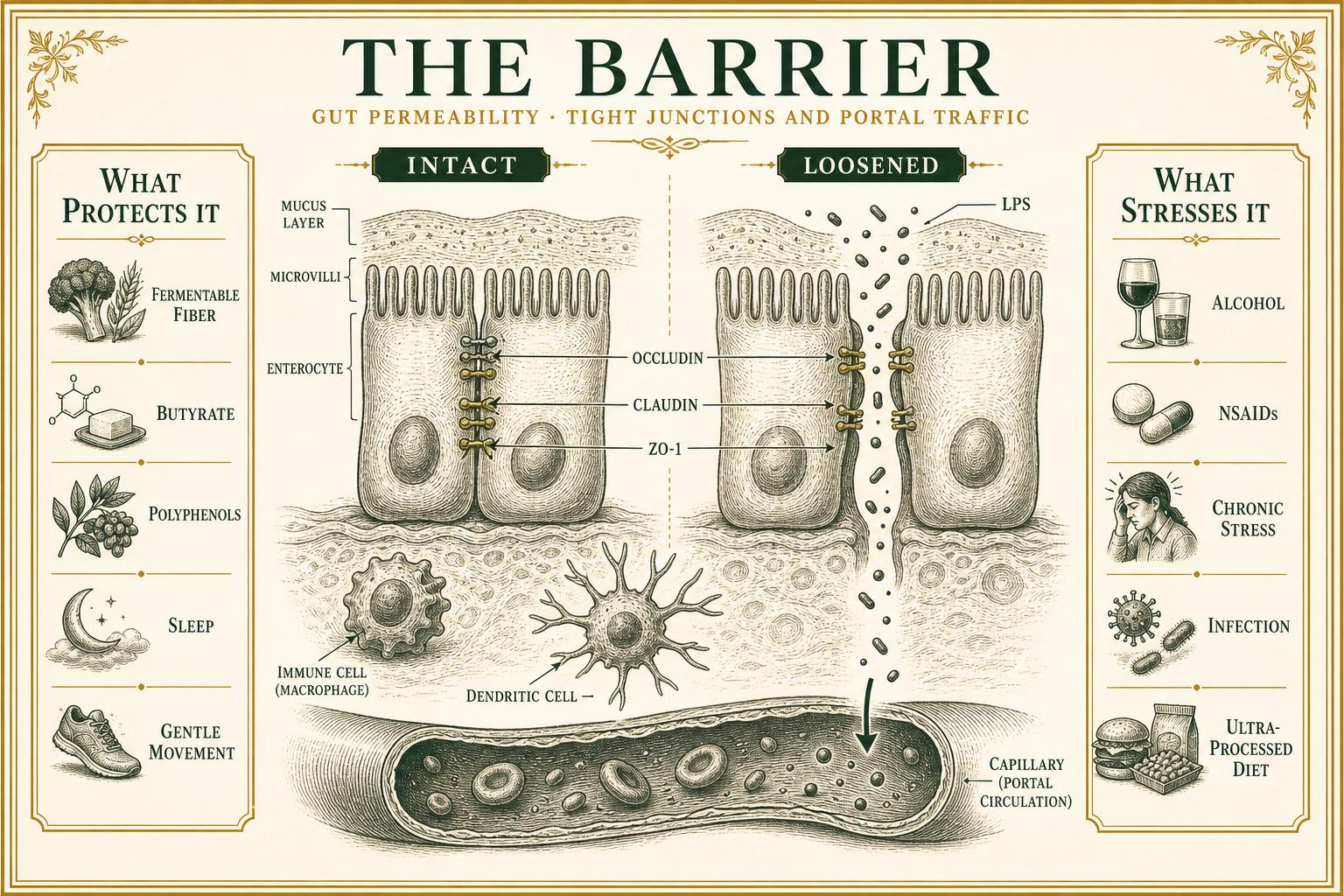
Barrier function is regulated by tight junction proteins, chiefly occludin and the claudin family, controlled by zonulin signaling.
Increased permeability lets lipopolysaccharide (LPS) enter circulation, driving low-grade systemic inflammation via TLR4.
Elevated permeability is well documented in celiac disease, IBD, and NSAID or alcohol injury; it is a contributing mechanism, not a standalone diagnosis.
The most evidence-backed interventions are fermentable fiber, polyphenols, adequate protein, alcohol and NSAID moderation, and stress reduction.
The Primer
What the barrier is made of
Four layers work together: the microbiota itself, which competes with pathogens; a mucus layer, fed largely by fiber-derived short-chain fatty acids; the epithelial cells joined by tight junctions; and the immune tissue underneath that samples what gets through.
Damage to any layer increases the load on the others. Thin mucus means more direct contact with epithelium. Compromised junctions mean more bacterial fragments reaching immune cells.
Why leakage causes symptoms far from the gut
When bacterial cell-wall fragments cross into circulation, the immune system responds as it would to infection: cytokine release, systemic low-grade inflammation, and downstream effects on insulin sensitivity, mood, joint pain, and fatigue. This is why gut barrier dysfunction shows up in conversations about conditions that have nothing obviously to do with digestion.
What damages it
Chronic alcohol use, regular NSAID use, low-fiber diets, prolonged psychological stress, intense endurance exercise in the heat, acute infections, and antibiotic-driven microbiome disruption. Notably, digestive symptoms are not required — permeability changes can occur without bloating or pain.
What supports it
Fermentable fiber that feeds butyrate producers, polyphenol-rich plants, adequate protein, fermented foods, sleep, and reducing the chronic irritants above. This is unglamorous and it is where the actual evidence sits.
The Deep Dive
Tight junction regulation
Tight junctions are protein complexes — occludin, claudins, and the ZO scaffolding family — that seal the space between epithelial cells while permitting regulated paracellular transport. Zonulin, identified by Fasano's group as a human analog of the cholera toxin ZOT protein, reversibly disassembles these complexes and is the principal known physiological regulator.
Gliadin fragments and certain bacterial products trigger zonulin release; in genetically susceptible individuals this contributes to celiac pathogenesis. Serum zonulin as a commercial biomarker remains contested — assay specificity is poor, and several published measurements likely detect related proteins rather than zonulin itself.
Tier II · Members only · Free
Continue into the deep dive
Tier I is free and always open. Tier II — the full mechanisms, dosing detail, nuance, and citations — unlocks with a free Vital Codex membership.
- Every Tier II deep dive across all hubs
- Saved reading progress across articles
- Member knowledge modules and their quizzes
- The Dispatch, if you opt in
Frequently asked
Is "leaky gut" a real diagnosis?
Intestinal permeability is a real, measurable physiological variable, and it is elevated in celiac disease, IBD, and alcohol or NSAID injury. "Leaky gut syndrome" as a standalone diagnosis that explains unrelated chronic symptoms is not established.
Can I test for it?
Research settings use the lactulose/mannitol urinary ratio. Most commercial panels, including serum zonulin, have significant validity problems. Testing rarely changes what a person should do.
What single change helps most?
Increasing the diversity and quantity of fermentable fiber, while reducing alcohol and unnecessary NSAID use. Those levers have the most consistent mechanistic and clinical support.
Do probiotics repair the barrier?
Some strains improve permeability markers in specific conditions, and the effects are strain-specific rather than general. Feeding your existing microbiota with fiber tends to produce more reliable results than adding new organisms.
Continue exploring: Inflammation — Cytokine signaling and chronic low-grade systemic stress.
Explore Inflammation