Erectile dysfunction is routinely treated as an isolated symptom. In middle-aged men it is more accurately read as a signal — an early, visible readout of how the endothelium, the autonomic nervous system, and glucose regulation are behaving under load.
The clinically useful reframe is that erection quality is a downstream marker of vascular and metabolic health. When the terrain improves, the symptom typically follows.
Contents(9 sections)
Key takeaways
Prediabetes raises ED prevalence well before a formal diabetes diagnosis appears.
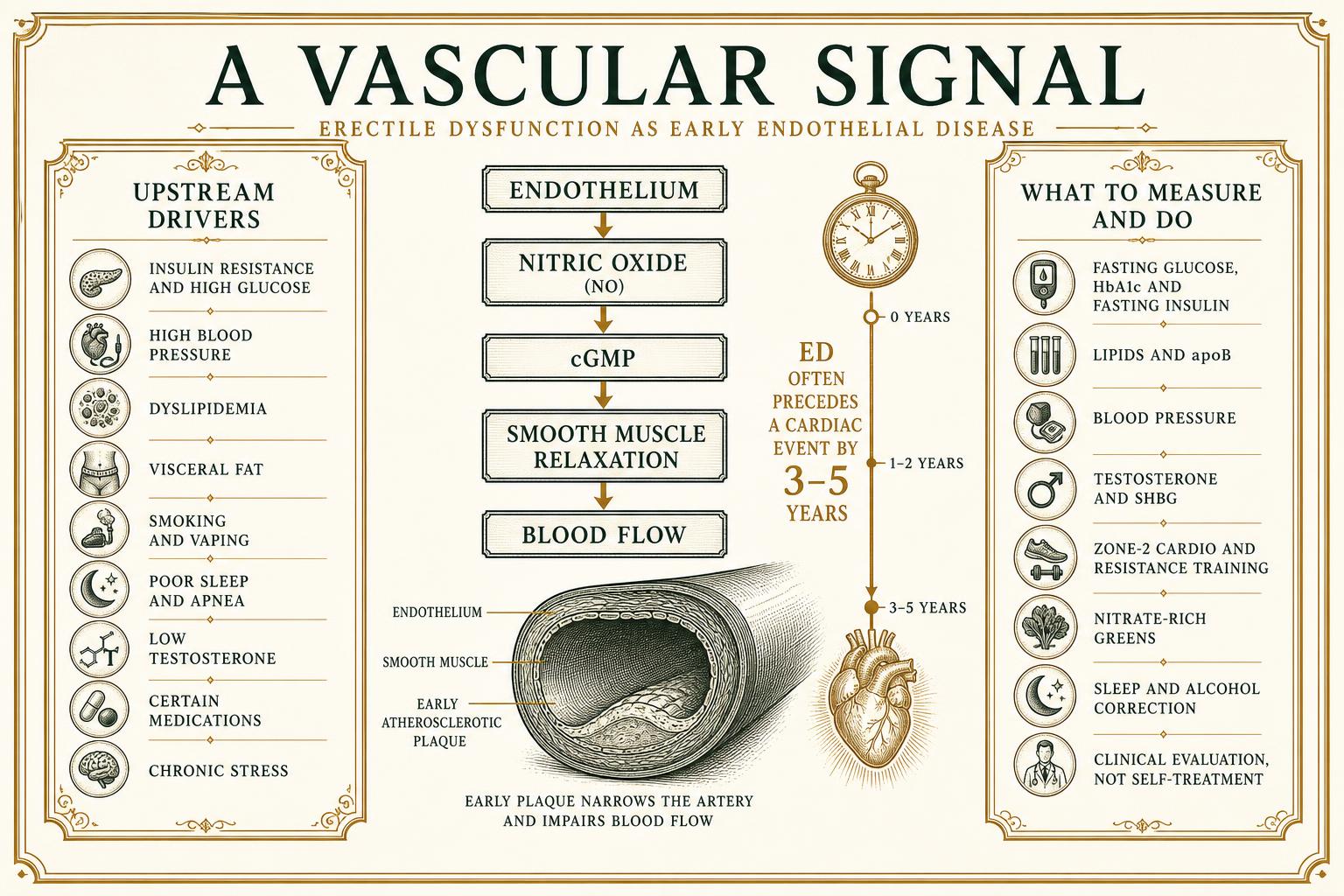
The small penile vessels are impaired earlier than larger coronary arteries — ED is often a leading cardiovascular indicator.
Mediterranean-pattern eating has the strongest observational and interventional evidence for restoring function.
Meaningful change typically appears in an 8–12 week window when diet, movement, and sleep are addressed together.
The Primer
What actually drives it
A reliable erection depends on responsive blood vessels, intact nerve signaling, adequate cellular energy, and a nervous system calm enough to allow arousal. When insulin resistance, elevated fasting glucose, chronic inflammation, poor sleep, or excess visceral adiposity strain any of those systems, the failure shows up first in the smallest, most pressure-sensitive vessels.
Prediabetes and type 2 diabetes damage the endothelium — the thin inner lining of blood vessels that produces nitric oxide, the signal that tells arteries to dilate and fill erectile tissue. Loss of nitric oxide bioavailability is one of the earliest and most consistent findings in men with declining erection quality.
The realistic path back
There is no single supplement that meaningfully rewrites vascular biology. What does work is a coordinated shift: Mediterranean-pattern eating built around protein, vegetables, legumes, olives, and minimally processed carbohydrates; 30 minutes of daily walking; strength training two to three times per week; and enough sleep to allow overnight parasympathetic recovery.
Most men who make these changes consistently notice better morning erections and steadier energy within four weeks, with more reliable performance emerging between weeks six and twelve.
The Deep Dive
Endothelial dysfunction and nitric oxide
The endothelium produces nitric oxide via endothelial NO synthase (eNOS). Hyperglycemia, oxidized LDL, and elevated ADMA reduce eNOS coupling, shifting the enzyme toward superoxide production. The result is less vasodilation and more oxidative stress — a self-reinforcing loop.
In men with prediabetes, this shift is measurable years before HbA1c crosses diagnostic thresholds. Flow-mediated dilation is a research-grade readout of the same biology that governs erection reliability.
Tier II · Members only · Free
Continue into the deep dive
Tier I is free and always open. Tier II — the full mechanisms, dosing detail, nuance, and citations — unlocks with a free Vital Codex membership.
- Every Tier II deep dive across all hubs
- Saved reading progress across articles
- Member knowledge modules and their quizzes
- The Dispatch, if you opt in
Frequently asked
Is ED always a metabolic problem?
Not always, but in middle-aged and older men it is one of the most common early markers of insulin resistance, prediabetes, and vascular strain. Erectile changes often precede a formal diagnosis by years.
How long until diet and exercise change anything?
Most men notice better energy and morning erections within two to four weeks. More reliable erection quality typically emerges between six and twelve weeks of consistent change.
Do I still need medication?
Sometimes, and there is no shame in it. Medications tend to work at lower doses and more predictably once the underlying vascular and metabolic terrain is improving.
Continue exploring: Metabolism — Glucose variability, insulin sensitivity, and substrate flexibility.
Explore Metabolism