Insulin resistance is rarely diagnosed by the marker that would catch it earliest. Fasting glucose and HbA1c can look normal for a decade while fasting insulin has already climbed into a range that predicts nearly every chronic disease of aging.
Contents(9 sections)
Key takeaways
Fasting insulin and HOMA-IR detect the problem years before glucose or HbA1c.
The clinical fingerprint: elevated triglycerides, low HDL, expanding waist, afternoon energy crashes.
Muscle mass, walking after meals, and reducing ultra-processed carbohydrate density are the highest-yield interventions.
The Primer
What insulin resistance actually is
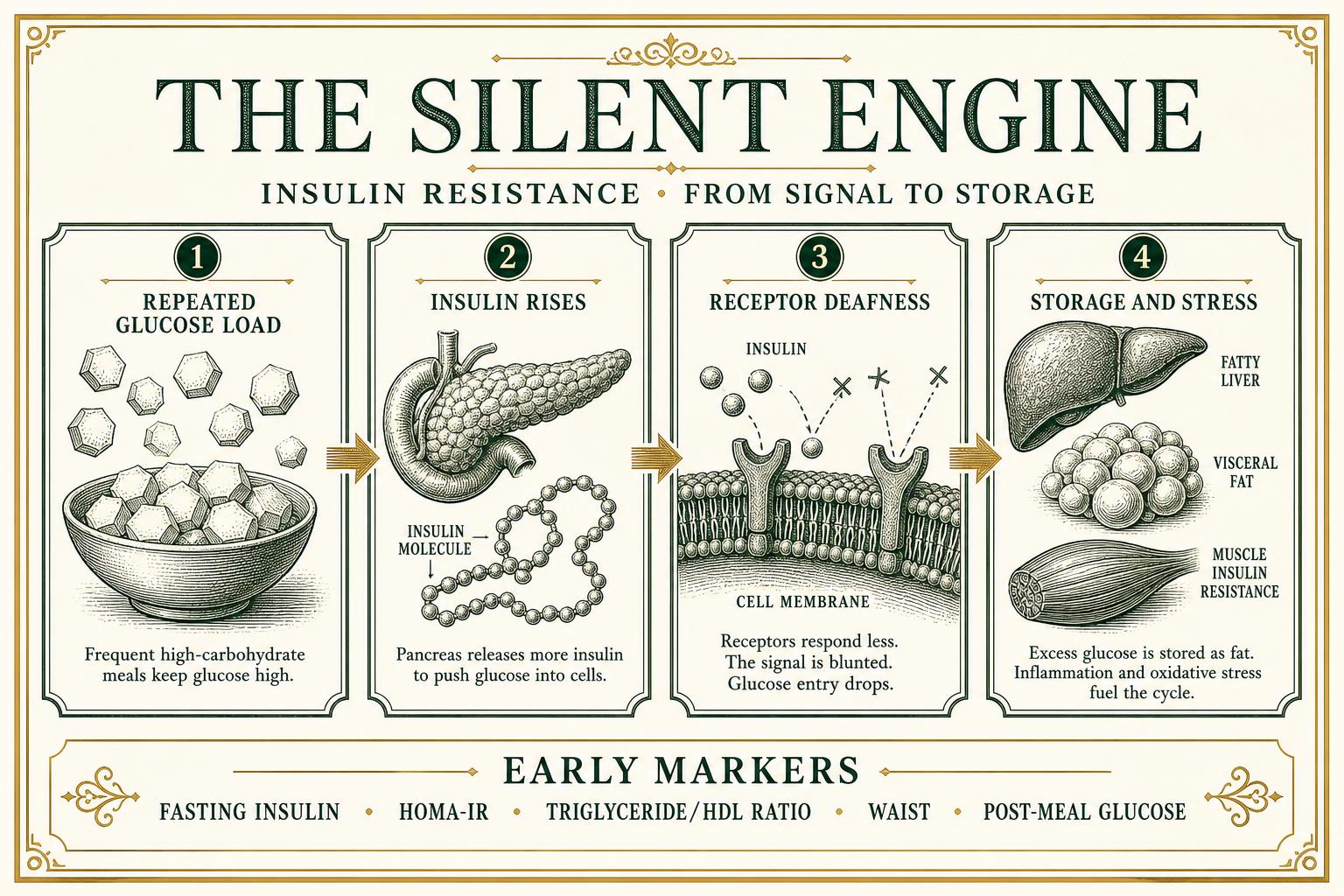
Insulin's job is to escort glucose out of the bloodstream and into cells. In insulin resistance, those cells respond less to the signal, and the pancreas has to release more insulin to achieve the same effect. Blood sugar can stay 'normal' for years while insulin runs high — silently.
Because insulin does more than manage glucose (it also drives fat storage, sodium retention, and vascular smooth muscle behavior), chronically elevated insulin has effects far beyond blood sugar.
The signals you can read at home
Waist expanding faster than weight, energy crashes 60–90 minutes after carbohydrate-heavy meals, skin tags, and darkened skin at the neck or armpits (acanthosis nigricans) all point in the same direction. So does a fasting triglyceride-to-HDL ratio above ~2.
The intervention set is unglamorous but well-supported: build muscle, walk after meals, sleep adequately, and reduce the density of ultra-processed carbohydrates.
The Deep Dive
The biomarkers that catch it early
Fasting insulin below ~7 µIU/mL, HOMA-IR below ~1.5, and a triglyceride-to-HDL ratio near 1 are conservative targets. HbA1c and fasting glucose lag these by years.
Continuous glucose monitoring can add texture — a healthy metabolic response typically holds postprandial peaks under ~140 mg/dL with a return to baseline within two hours.
Tier II · Members only · Free
Continue into the deep dive
Tier I is free and always open. Tier II — the full mechanisms, dosing detail, nuance, and citations — unlocks with a free Vital Codex membership.
- Every Tier II deep dive across all hubs
- Saved reading progress across articles
- Member knowledge modules and their quizzes
- The Dispatch, if you opt in
Frequently asked
Can I be insulin resistant with normal blood sugar?
Yes — for years. Elevated fasting insulin usually appears well before fasting glucose or HbA1c drift out of range.
What single change moves the needle fastest?
For most people, adding regular strength training and a short walk after meals produces a measurable change in fasting insulin within weeks.
Continue exploring: Metabolism — Glucose variability, insulin sensitivity, and substrate flexibility.
Explore Metabolism