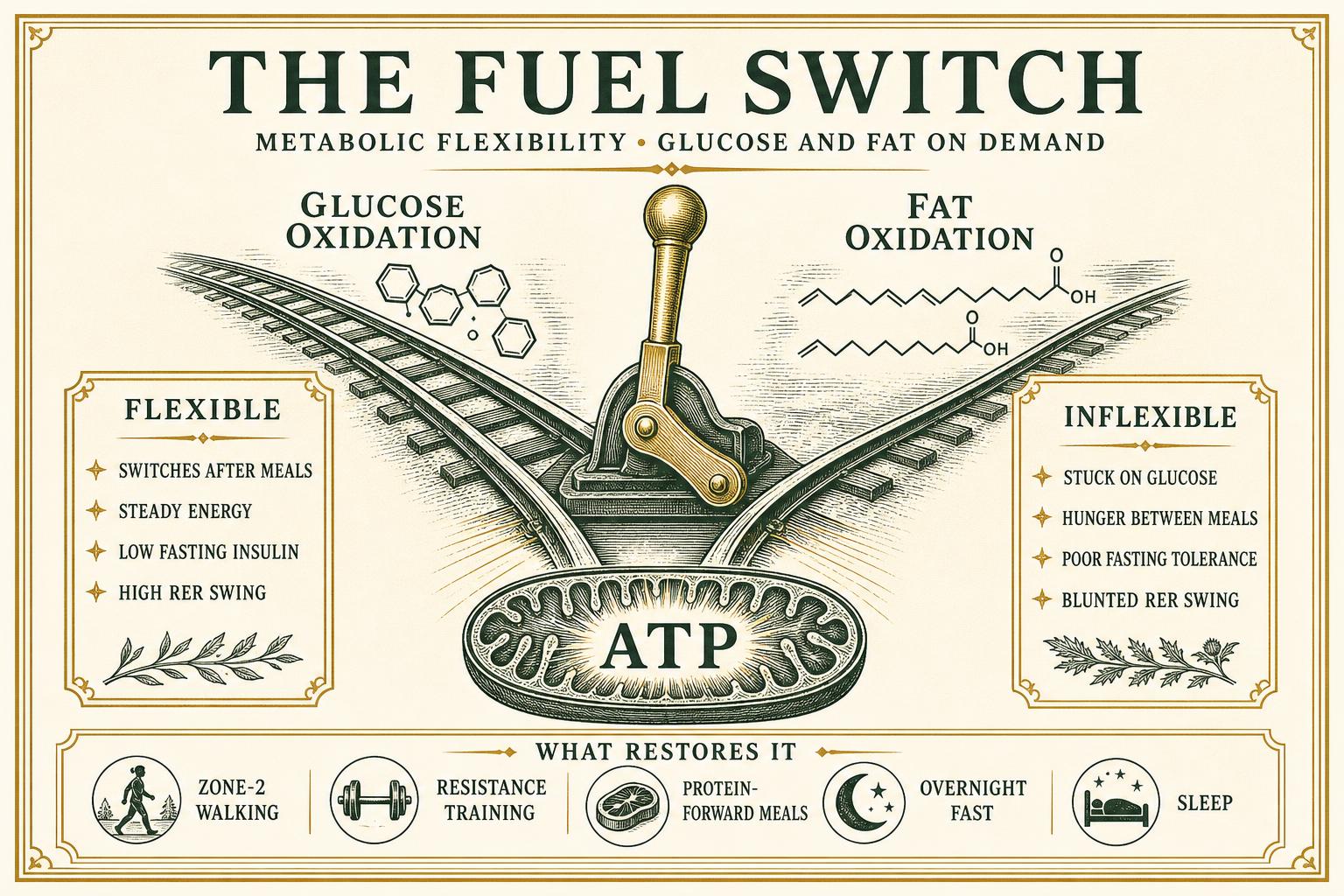
Metabolic flexibility is the capacity to match fuel use to fuel availability: burning carbohydrate when it is abundant, shifting to fat when it is not, and doing so without symptoms. Inflexibility — being stuck in one mode — shows up as energy crashes, hunger between meals, and poor exercise tolerance long before any lab value crosses a diagnostic line.
Contents(12 sections)
Key takeaways
Flexibility is measured by how well fuel oxidation shifts between fasted and fed states, quantified by the respiratory exchange ratio.
Inflexibility precedes insulin resistance and correlates with mitochondrial density and quality.
The five pillars: aerobic base, resistance training, protein-anchored meals, an overnight fast, and sleep.
Improvements show up in weeks, often before body composition visibly changes.
The Primer
What flexibility feels like
A metabolically flexible person can miss a meal without irritability, do easy exercise before breakfast, and eat a mixed meal without a crash 90 minutes later. A metabolically inflexible person needs to eat every few hours, feels shaky when they do not, and fatigues quickly at low exercise intensities.
Those experiences are not personality. They are readouts of how well cells switch fuels.
Why it degrades
Constant carbohydrate availability, low muscle mass, low aerobic capacity, and poor sleep all push cells toward relying on glucose and losing the machinery to oxidize fat efficiently. Visceral fat and elevated insulin then lock the pattern in: insulin suppresses fat release, so the fat-burning pathway is rarely used and rarely maintained.
The five pillars
- Aerobic base — 150–240 minutes weekly of conversational-pace work builds the mitochondrial capacity that fat oxidation depends on.
- Resistance training — two to three sessions weekly expand the largest disposal site for post-meal glucose.
- Protein-anchored meals — 30–40 g of protein per meal blunts glucose swings and reduces snacking pressure.
- An overnight fast — 12–14 hours of not eating gives the fat-oxidation pathway regular use.
- Sleep — a single short night measurably reduces insulin sensitivity the following day.
None of these are novel. Their effect is in combination and consistency.
The Deep Dive
The measurement: RER and metabolic crossover
Respiratory exchange ratio (RER, or RQ) — the ratio of CO₂ produced to O₂ consumed — indexes substrate use: approximately 0.70 for pure fat oxidation, 1.00 for pure carbohydrate. A flexible individual shows a low fasting RER (~0.78–0.82) that rises toward 0.95+ during a hyperinsulinemic clamp or after a mixed meal, then falls again.
Kelley and Mandarino's original work showed that individuals with obesity and type 2 diabetes had elevated fasting RER and a blunted rise with insulin — an inability to move in either direction. That bidirectional impairment, not a single fuel preference, defines inflexibility.
Tier II · Members only · Free
Continue into the deep dive
Tier I is free and always open. Tier II — the full mechanisms, dosing detail, nuance, and citations — unlocks with a free Vital Codex membership.
- Every Tier II deep dive across all hubs
- Saved reading progress across articles
- Member knowledge modules and their quizzes
- The Dispatch, if you opt in
Frequently asked
Is metabolic flexibility the same as being in ketosis?
No. Ketosis is one fuel state. Flexibility is the ability to move between states cleanly — a person locked in ketosis who handles carbohydrate poorly is not flexible.
How long does it take to improve?
Fasting insulin and postprandial glucose response often shift within four to eight weeks of consistent aerobic and resistance work. Mitochondrial adaptations continue accruing for months.
Do I need a metabolic cart test?
No. Fasting insulin, triglyceride-to-HDL ratio, and how you actually feel between meals and during easy exercise are sufficient for most people.
Does fasting alone fix it?
Rarely. Without muscle mass and aerobic capacity, extended fasting tends to cost lean tissue and does not build the oxidative machinery flexibility depends on.
Continue exploring: Metabolism — Glucose variability, insulin sensitivity, and substrate flexibility.
Explore Metabolism