Lead, mercury, cadmium, and arsenic have no biological function and cause damage through a small number of shared mechanisms: they bind sulfhydryl groups on proteins, displace essential minerals from enzymes, and generate oxidative stress inside mitochondria.
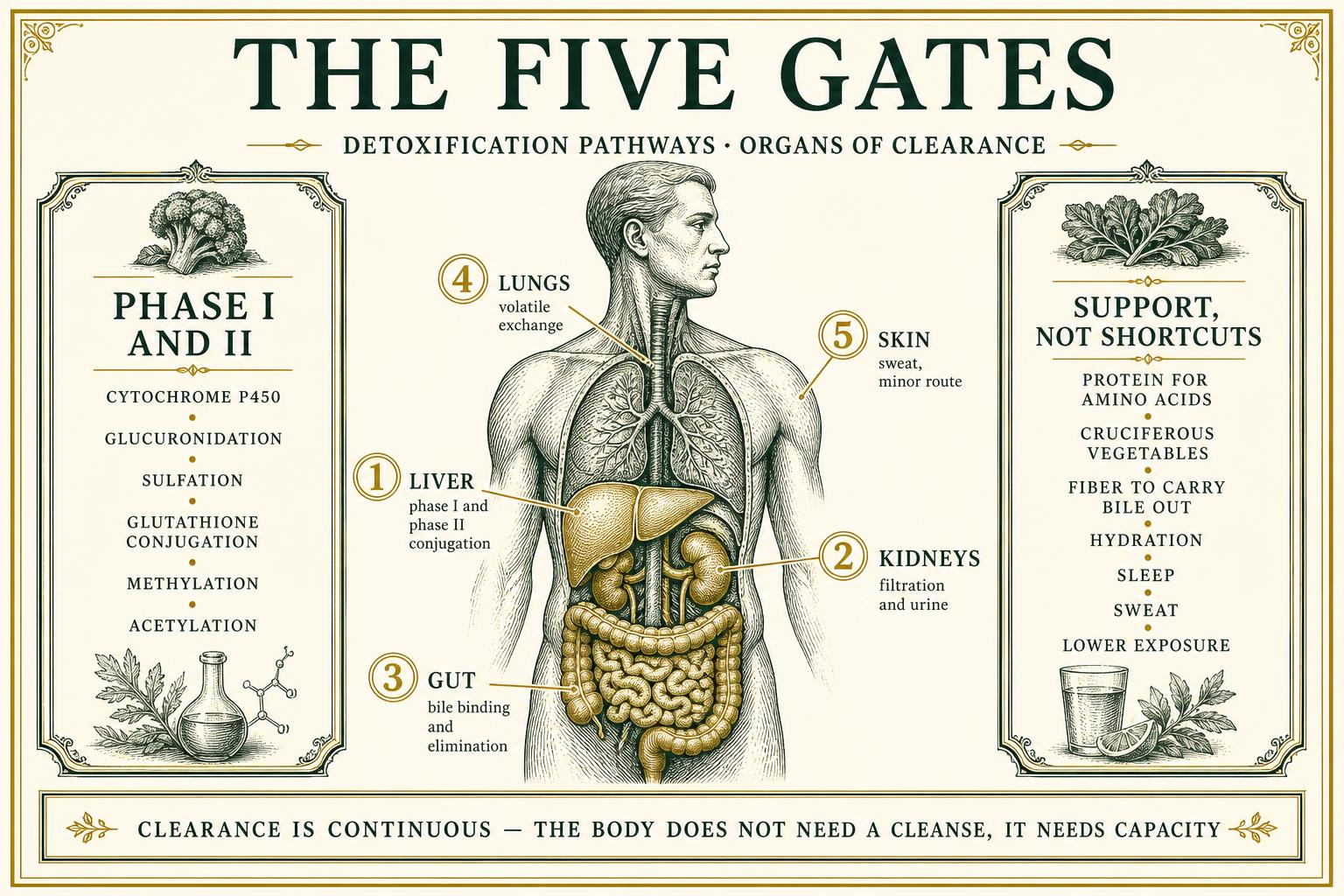
The body has genuine clearance machinery for them — hepatic conjugation, biliary excretion, renal filtration, metallothionein binding. Supporting that machinery is a different project from the "detox" products sold alongside it, and it is the one with evidence behind it.
Contents(12 sections)
Key takeaways
Toxic metals act primarily by binding thiol groups, displacing zinc, iron, and calcium, and generating mitochondrial oxidative stress.
Clearance runs through glutathione conjugation, metallothionein binding, bile, and urine — all nutrient-dependent.
Blood levels reflect recent exposure; bone stores lead for decades and release it during pregnancy, lactation, and menopause.
Pharmaceutical chelation is appropriate for confirmed significant toxicity only; unsupervised chelation redistributes metals and can injure kidneys.
The Primer
Where exposure actually comes from
Lead: pre-1978 paint dust, older plumbing and brass fittings, imported ceramics and spices, contaminated soil, some traditional cosmetics. Mercury: large predatory fish (tuna, swordfish, king mackerel, shark) as methylmercury, and dental amalgam and industrial sources as elemental or inorganic mercury. Cadmium: cigarette smoke by a wide margin, plus rice and leafy greens grown in contaminated soil. Arsenic: well water, rice and rice-based products, some fruit juices.
Reducing intake is almost always higher-leverage than trying to accelerate removal.
How the body clears them
The liver conjugates metals to glutathione and excretes the complexes in bile, which leaves in stool if fiber and bile flow are adequate. The kidney filters what circulates. Metallothionein — a small cysteine-rich protein whose production depends on zinc and selenium — binds metals inside cells and buffers their reactivity.
Every step depends on nutrients: cysteine and glycine for glutathione, zinc and selenium for metallothionein, B vitamins for methylation, fiber for biliary elimination.
What supports clearance
Adequate protein for glutathione substrates, sulfur-containing vegetables (garlic, onions, cruciferous), selenium and zinc sufficiency, generous fiber, hydration adequate for renal function, and no smoking. Sweating contributes a modest additional route for some metals, particularly cadmium and lead.
The Deep Dive
Mechanisms of injury
- Thiol binding — metals with high affinity for sulfhydryl groups inactivate enzymes at their cysteine residues, which is why glutathione, lipoic acid, and metallothionein double as both defense and target.
- Mineral displacement — lead substitutes for calcium in bone and in calcium-dependent signaling; cadmium displaces zinc from zinc-finger transcription factors; mercury interferes with selenoenzymes including glutathione peroxidase and the thyroid deiodinases.
- Mitochondrial oxidative stress — all four metals impair electron transport chain complexes and increase superoxide production, depleting glutathione and raising the lipid peroxidation burden. This is the common final pathway for the fatigue, cognitive, and cardiovascular associations seen in epidemiology.
- Epigenetic effects — arsenic and cadmium alter DNA methylation patterns; arsenic in particular consumes methyl groups during its own biotransformation, creating an interaction with folate and B12 status.
Tier II · Members only · Free
Continue into the deep dive
Tier I is free and always open. Tier II — the full mechanisms, dosing detail, nuance, and citations — unlocks with a free Vital Codex membership.
- Every Tier II deep dive across all hubs
- Saved reading progress across articles
- Member knowledge modules and their quizzes
- The Dispatch, if you opt in
Frequently asked
Should I get tested for heavy metals?
Test when there is a plausible exposure — older housing, well water, occupational contact, frequent large-fish consumption, imported cosmetics or spices — or unexplained symptoms consistent with toxicity. Blood and standard urine testing are appropriate; provoked urine testing is not.
Do detox supplements remove heavy metals?
Most do not, at meaningful rates. What genuinely helps is supporting the pathways the body already uses: glutathione substrates, zinc and selenium, fiber, and removing the source. Cilantro, chlorella, and zeolite have thin human evidence and are frequently oversold.
Is dental amalgam a problem?
Amalgam releases small amounts of mercury vapor, and population studies have not demonstrated harm at those levels in people without unusual sensitivity. Removal itself can produce a short exposure spike and should use proper isolation technique if done at all.
Does sweating detox metals?
Sweat contains measurable cadmium, lead, and some mercury, and sauna is a plausible minor adjunct. It is a supplement to hepatic and renal clearance, not a replacement for it.
Continue exploring: Mitochondria — Cellular energy production and the mechanisms of senescence.
Explore Mitochondria