The body continuously processes and eliminates metabolic waste, environmental chemicals, medications, and excess hormones. That work is not performed by a single "detox organ" or a juice fast — it is a coordinated system spanning the liver, kidneys, gastrointestinal tract, lungs, skin, blood, lymphatic circulation, and cellular antioxidant networks.
A useful natural-detox strategy therefore has two priorities: reduce the incoming burden, and support normal elimination. Commercial cleanses have not been convincingly shown to remove toxins or produce durable benefit; the National Center for Complementary and Integrative Health notes that studies of detox programs are few, generally low quality, and do not establish long-term effects. The aim is not to force detoxification. It is to make everyday clearance pathways work well.
The further a protocol moves from foundational lifestyle support toward extreme fasting, chronic binder use, or claims of universal toxin removal, the weaker the evidence becomes.
Contents(10 sections)
Key takeaways
Detoxification is continuous physiology, not an event; no cleanse product has been shown to accelerate it meaningfully.
Exposure reduction — water, food storage, tobacco, alcohol, indoor air — is higher-leverage than any supplement.
Liver conjugation depends on adequate protein, sulfur foods, B vitamins, and antioxidant capacity; fiber prevents reabsorption of what bile carries out.
Sweat is a real but secondary route: arsenic, cadmium, lead, mercury, and nickel are measurable in sweat, with dynamic exercise generally outperforming passive sauna.
NAC has the strongest mechanistic case (glutathione repletion); milk thistle evidence is mixed; binders like charcoal, clay, and zeolite are short-term, exposure-specific tools, not daily staples.
The Primer
The main pathways
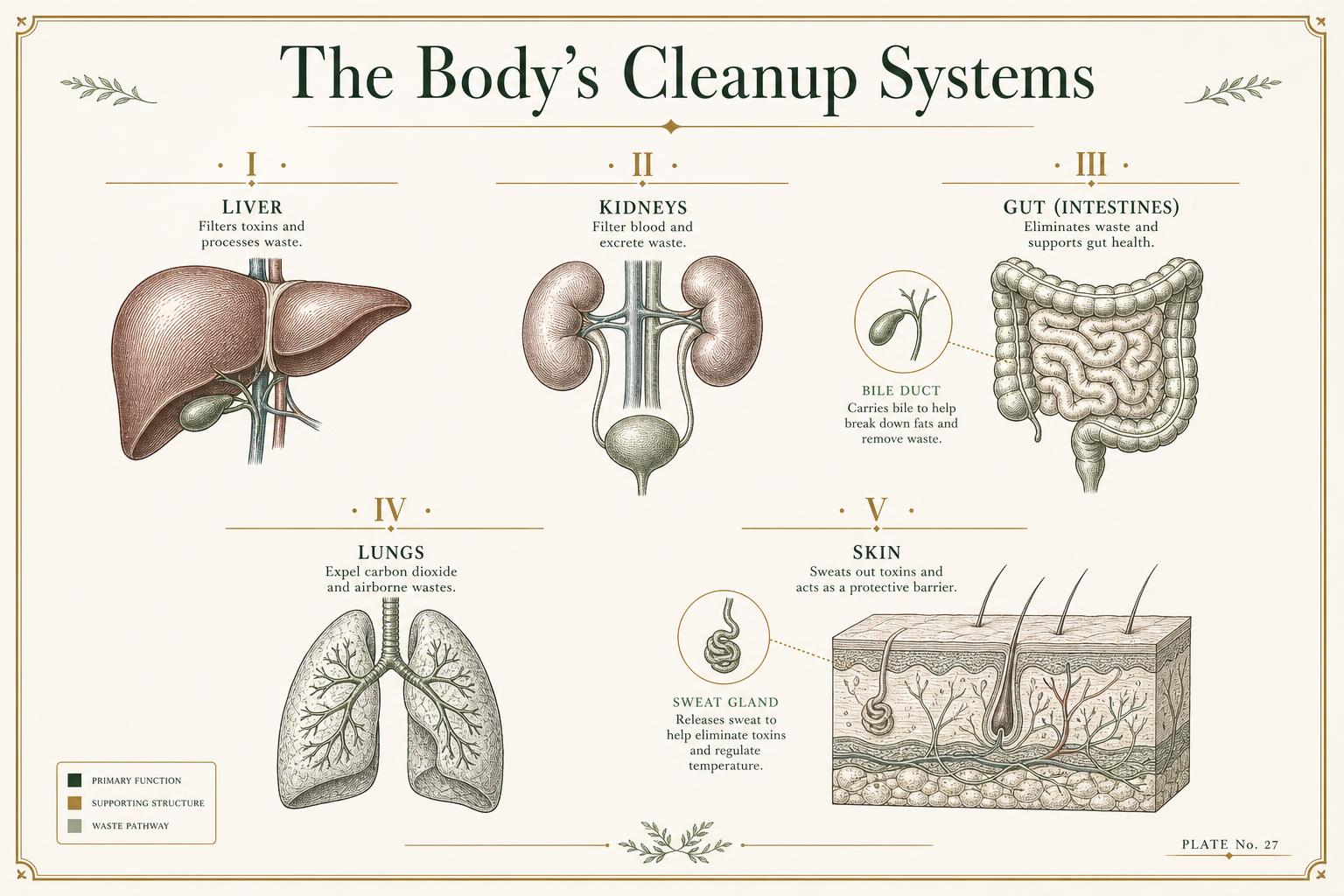
Liver — transformation and packaging. The liver modifies fat-soluble compounds so they can leave in bile or urine. Phase I alters compounds through oxidation, reduction, and hydrolysis; Phase II attaches water-soluble groups — glutathione, sulfate, glucuronic acid, glycine, methyl groups — making excretion easier. Bile then carries much of the output into the intestine. A low-protein, low-fiber, highly processed diet is not a sensible foundation for detox regardless of how many supplements sit on top of it.
Kidneys — filtration. The kidneys eliminate water-soluble waste and many drug metabolites. Hydration supports normal urine production, but more water is not better and can be dangerous. For most healthy adults, fluid intake sufficient to keep urine generally pale yellow is the practical guide, adjusted for climate, activity, diet, medications, and medical conditions.
Gut and bile — preventing reabsorption. If transit is sluggish or fiber intake is low, compounds leaving in bile can be reabsorbed (enterohepatic recirculation). Human fiber interventions lower fecal secondary bile acids; one randomized trial reported reductions in total fecal bile acids and deoxycholic acid after sustained high-dose wheat-bran intake.
Lungs and skin — secondary routes. The lungs clear carbon dioxide and volatile compounds. Sweat is a genuine if minor excretion route for certain inorganic elements, with arsenic, cadmium, lead, mercury, and nickel all measured in it. This complements hepatic and renal clearance; it does not replace it.
The foundation, in order of value
- Reduce exposures first. Filtered drinking water where quality is uncertain. No heating food in plastic. Fresh over heavily packaged foods. Wash produce. Eliminate tobacco smoke. Keep alcohol modest or absent, especially with liver disease, elevated enzymes, or medications. Improve indoor air by cutting fragranced aerosols, controlling mold and water damage, and ventilating during cleaning, painting, or solvent use.
- Hydration and electrolytes. Drink consistently across the day rather than forcing volume. Increase during heat, labor, sauna, illness, or hard training, and replace electrolytes with prolonged heavy sweating. Consult a clinician before increasing fluids aggressively with heart failure, kidney disease, cirrhosis, hyponatremia risk, or diuretic use.
- Fiber and regular bowel movements. Food-based fiber is the most practical binder available. Ground flaxseed and chia, oats and barley, beans, lentils, chickpeas, apples, citrus, berries, pears, okra, carrots, beets, sweet potatoes, leafy greens, cruciferous vegetables — and psyllium if food alone falls short. Increase gradually with adequate fluid.
- Protein, sulfur foods, antioxidant nutrients. Conjugation pathways run on glycine, cysteine, taurine, glutamine, and methionine. Free-range eggs, fish, poultry, meat, dairy, and legumes supply the substrate; garlic, onions, leeks, and chives plus broccoli, cabbage, Brussels sprouts, cauliflower, kale, and arugula supply the sulfur. Add vitamin C-rich foods and modest selenium (Brazil nuts, where appropriate).
- Movement. In a meta-analysis of 21 randomized trials in 1,530 adults with overweight or fatty liver, exercise training significantly reduced intrahepatic fat and fasting free fatty acids. A realistic baseline: daily walking, two or more weekly strength sessions, moderate aerobic conditioning.
- Sleep and stress regulation. Chronic sleep restriction and persistent stress worsen inflammation, degrade food choices, and indirectly burden clearance capacity. Regular sleep and wake times, morning daylight, dimmer evenings, and one repeatable stress-regulation practice.
The Deep Dive
Supplements: what each one can honestly claim
N-acetylcysteine (NAC). A cysteine donor that replenishes intracellular glutathione. Its best-established use is acetaminophen overdose, where it prevents or reduces liver injury primarily by restoring hepatic glutathione. For general use the accurate framing is support for glutathione status and antioxidant defense, not universal toxin removal. Medical supervision is appropriate with multiple medications, active ulcers, asthma, or bleeding disorders — and NAC is never a substitute for urgent care after an overdose.
Milk thistle (silymarin). Antioxidant, anti-inflammatory, and membrane-stabilizing effects in laboratory and animal work. Clinical evidence in chronic liver disease is mixed: systematic reviews found no consistent benefit on mortality, histology, or standard liver markers in higher-quality trials. The responsible claim is that it may support hepatic antioxidant defenses — not that it treats hepatitis, cirrhosis, or toxic exposure.
Tier II · Members only · Free
Continue into the deep dive
Tier I is free and always open. Tier II — the full mechanisms, dosing detail, nuance, and citations — unlocks with a free Vital Codex membership.
- Every Tier II deep dive across all hubs
- Saved reading progress across articles
- Member knowledge modules and their quizzes
- The Dispatch, if you opt in
Frequently asked
Do detox teas, juice cleanses, or 7-day programs work?
There is no convincing clinical evidence that commercial detox programs remove toxins or produce durable health benefits. Reviews describe the available studies as few and generally low quality. Any short-term improvement people notice usually tracks with removing alcohol and ultra-processed food, not with the product itself.
What is the single highest-value natural detox step?
Reducing exposure. Filtered water where quality is uncertain, no tobacco smoke, modest or no alcohol, less food heated or stored in plastic, and better indoor air lower the clearance demand placed on the liver and kidneys more reliably than any supplement raises capacity.
Does sweating in a sauna remove toxins?
Partly and modestly. Arsenic, cadmium, lead, mercury, and nickel are measurable in sweat, and a 2022 comparison found higher concentrations in exercise-generated sweat than in passive sauna sweat. Treat it as a supplementary route alongside hepatic and renal clearance, with hydration and electrolytes handled sensibly.
Should I take a binder like charcoal or zeolite regularly?
No. Binders are best used short-term and for a specific reason. Used chronically they can bind medications and nutrients, worsen constipation, and mask a problem that needs diagnosis. Separate any binder from prescriptions and essential supplements by several hours.
Is NAC better than milk thistle for liver support?
Mechanistically NAC has the stronger case: it replenishes glutathione and is the hospital standard of care for acetaminophen overdose. Milk thistle is generally well tolerated but higher-quality trials have not shown consistent benefit on mortality, histology, or liver markers in chronic liver disease.
Continue exploring: Nutrition — Protein sufficiency, micronutrient density, and food quality.
Explore Nutrition