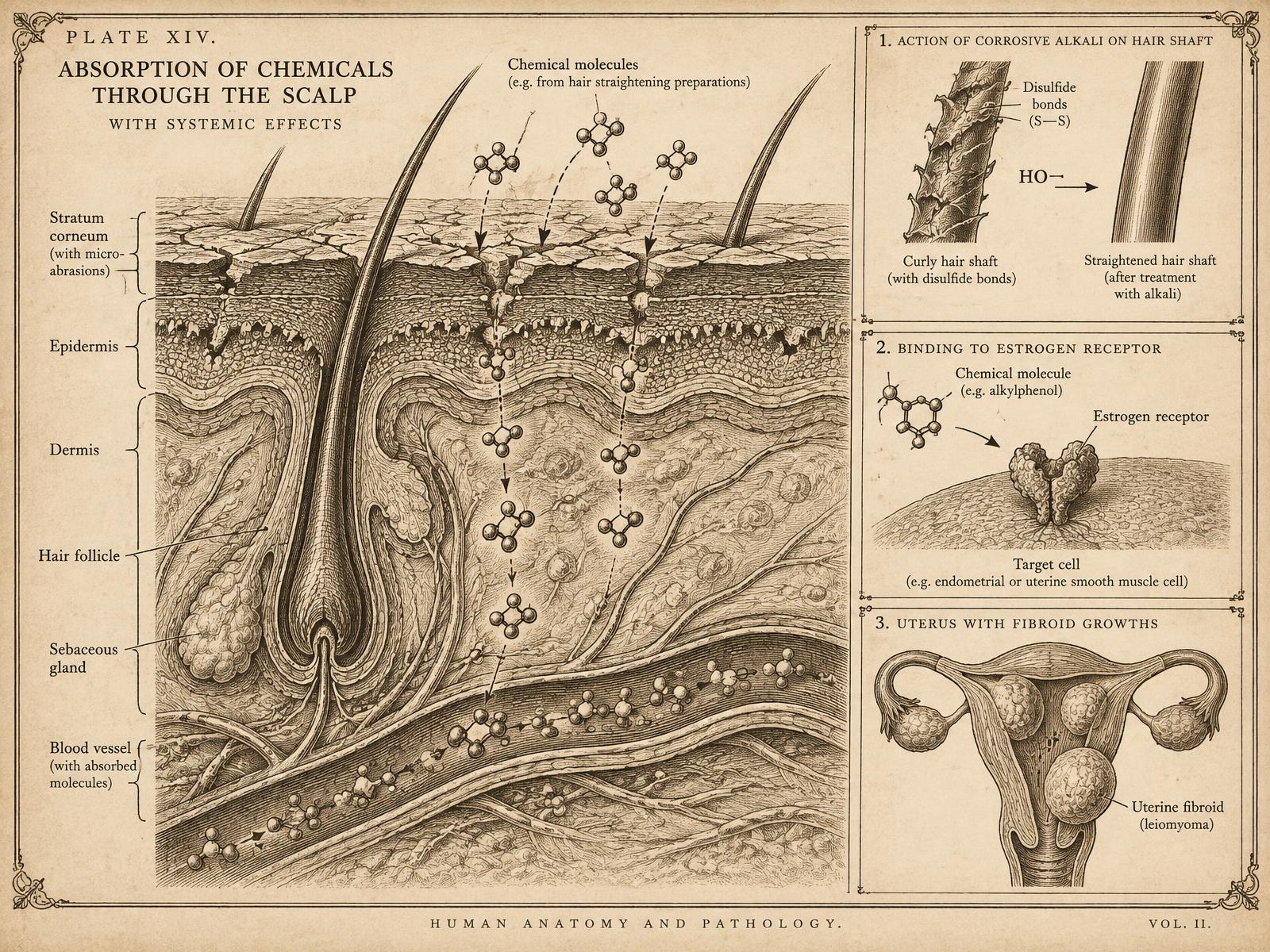
For decades, Black women were systematically told their natural hair textures were unprofessional or unmanageable — and the beauty industry sold chemical relaxers as the fix. Today, major manufacturers including L'Oréal face consolidated federal litigation (MDL 3060) and state consumer-protection lawsuits alleging they concealed links between chronic relaxer use and uterine cancer, ovarian cancer, and uterine fibroids. The biological mechanism is now well characterized: corrosive alkalis damage the scalp barrier, and hormone-mimicking compounds pass through that damage directly into the bloodstream.
Science is now catching up to what many women experienced firsthand — an industry that profited from their health is being asked to account for it.
Contents(3 sections)
Key takeaways
Chemical relaxers rely on strong alkalis (sodium hydroxide, guanidine hydroxide) at pH 11–14, which frequently cause scalp burns and micro-abrasions.
Fragranced relaxer formulas commonly contain phthalates and parabens — endocrine-disrupting chemicals that mimic estrogen.
Scalp micro-abrasions compromise the skin barrier, allowing lipophilic endocrine disruptors to bypass first-pass liver metabolism and enter systemic circulation.
Large cohort studies, including the Black Women's Health Study, associate moderate-to-heavy relaxer use with significantly elevated uterine cancer risk.
L'Oréal USA and other manufacturers face consolidated federal multidistrict litigation (MDL 3060) and state actions alleging failure to warn consumers.
The FDA has proposed banning formaldehyde in hair products, and several states have enacted Toxic-Free Cosmetics Acts.
Risk scales with cumulative exposure: frequency of use, years of use, and scalp damage during application all matter.
The Primer
Frequently asked
Do chemical hair relaxers cause cancer?
Large cohort studies, including the Black Women's Health Study, associate moderate-to-heavy relaxer use with significantly elevated uterine cancer risk, and lawsuits allege manufacturers concealed these links. Association is not proof of causation in every individual case, but the mechanistic pathway — barrier damage plus estrogen-mimicking chemicals — is biologically plausible and increasingly well documented.
What chemicals in relaxers are the main concern?
Four classes dominate: corrosive alkalis (sodium hydroxide, guanidine hydroxide) that damage the scalp barrier; phthalates hidden in fragrances; parabens used as preservatives; and formaldehyde or methylene glycol released when straightening products are heat-activated.
Are "no-lye" relaxers safe?
No-lye formulas replace sodium hydroxide with guanidine hydroxide, which is still highly alkaline (pH 11–14) and still causes scalp damage. They may also contain the same fragrance phthalates and paraben preservatives. "No-lye" describes the alkali, not the endocrine-disrupting load.
What is the lawsuit against L'Oréal about?
L'Oréal USA and other manufacturers face consolidated federal multidistrict litigation (MDL 3060) and state consumer-protection actions alleging they failed to warn consumers about links between chronic chemical relaxer use and uterine cancer, ovarian cancer, and fibroids.
How can I reduce my risk if I continue to straighten my hair?
Lengthen the interval between applications, never apply to a damaged or freshly combed scalp, favor fragrance-free formulas, avoid heat-activated keratin treatments in unventilated spaces, and consider non-chemical protective styling. --- Disclaimer: This article is for informational and educational purposes only and does not constitute medical or legal advice. If you have been affected by the issues discussed, please consult a healthcare professional and a qualified attorney.
Continue exploring: Hormones — Endocrine rhythm, cortisol regulation, and signaling health.
Explore HormonesThe Codex Dispatch
More on Hormones, one email a week
One considered email each Sunday: research translation, no hype, no supplement pitches. Separate from membership — unsubscribe anytime.