A single clinic blood pressure reading is one of the least reproducible measurements in routine medicine, yet it is often treated as a verdict. Averaged home readings and, better still, ambulatory monitoring predict cardiovascular events more accurately than clinic values do (Staessen et al., JAMA, 1999; Sega et al., Circulation, 2005).
Reading blood pressure well means looking at four things: the average across many measurements, the gap between systolic and diastolic (pulse pressure), whether pressure falls overnight, and what the trend is doing over months.
Contents(14 sections)
Key takeaways
Averaged home readings predict outcomes better than single clinic measurements.
Pulse pressure — systolic minus diastolic — reflects arterial stiffness and carries independent risk information after age 50.
Blood pressure should fall 10–20% overnight; a non-dipping pattern is an independent risk marker.
White-coat and masked hypertension are both common, and both are only detectable with out-of-office measurement.
The interventions with the largest measured effect are sodium-to-potassium balance, weight and visceral fat, exercise, sleep apnea treatment, and alcohol reduction.
The Primer
What the two numbers mean
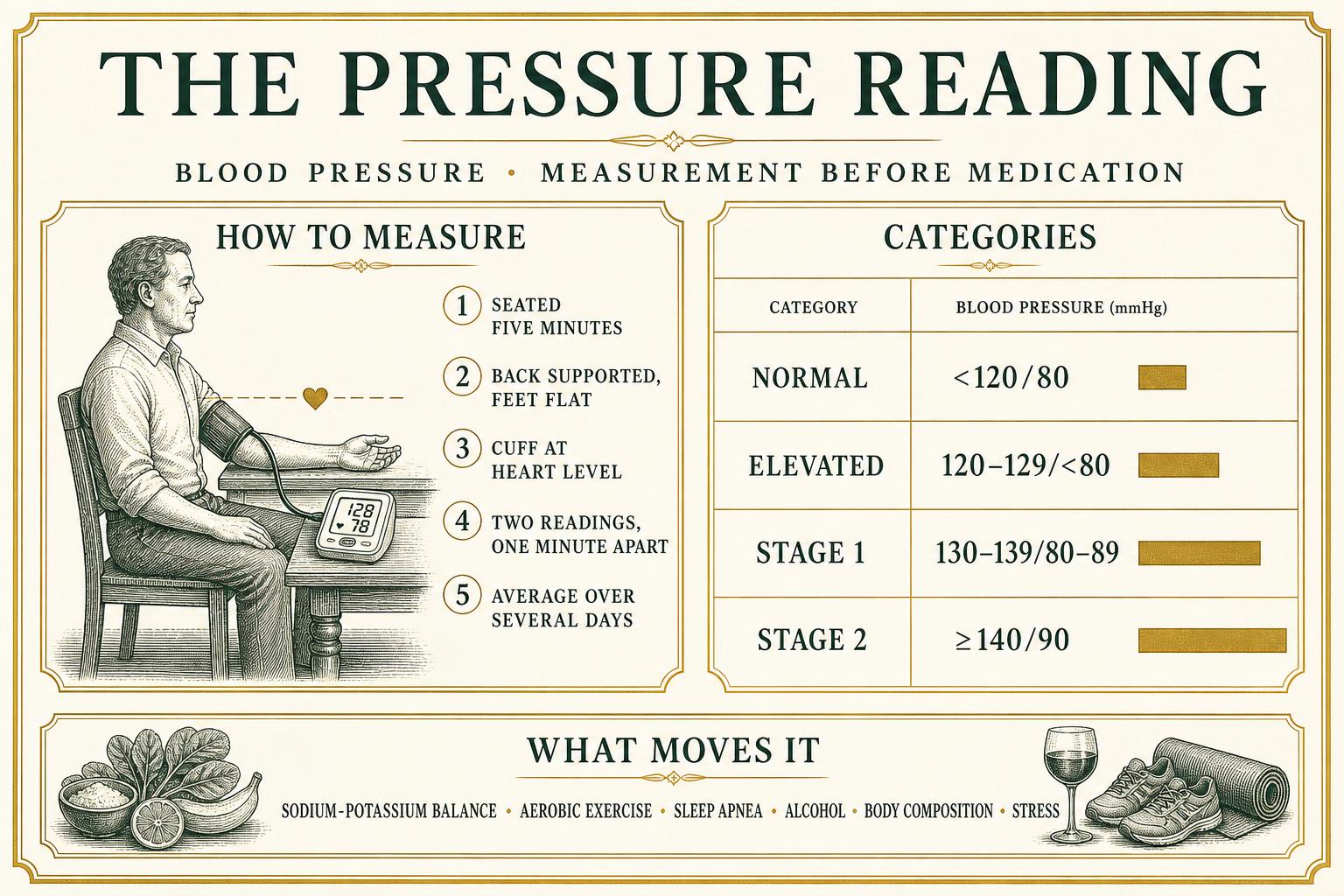
Systolic is the peak pressure as the heart contracts; diastolic is the resting pressure between beats. Under current US guidelines, normal is below 120/80, elevated is 120–129 systolic, stage 1 hypertension is 130–139 or 80–89, and stage 2 is 140/90 or above. European guidelines set the hypertension threshold at 140/90, which is why patients sometimes receive conflicting labels for the same reading.
Why one reading tells you little
Blood pressure varies by 10–20 mmHg or more across a day in response to posture, caffeine, conversation, bladder fullness, room temperature, cuff size, and stress. Measuring once, in a rushed clinic, after a waiting-room delay, produces a number with wide error bars. Two readings a minute apart, morning and evening, over seven days gives something far more meaningful.
How to measure correctly at home
Sit for five minutes first, back supported, feet flat, arm resting at heart height. Use a validated upper-arm cuff sized to your arm, not a wrist device. No caffeine, exercise, or nicotine for 30 minutes prior. Empty bladder. Take two readings a minute apart and record both. Average the week, discarding day one.
What actually lowers it
Increasing dietary potassium from vegetables, fruit, and legumes while reducing added sodium; losing visceral fat; regular aerobic exercise and, notably, isometric work such as wall sits or handgrip holds; treating sleep apnea if present; keeping alcohol low; and managing chronic stress and sleep debt. Medication is appropriate and effective when these are insufficient, and combining both is not a failure.
The Deep Dive
Pulse pressure and arterial stiffness
After roughly age 50, systolic pressure keeps rising while diastolic often falls — widening pulse pressure. This reflects loss of aortic elastin and increased collagen crosslinking, which reduce the aorta's ability to buffer each stroke volume. A pulse pressure above roughly 60 mmHg carries independent predictive value for cardiovascular events, and an isolated systolic elevation with low diastolic pressure is a stiffness problem rather than a resistance problem. It responds differently to therapy — vasodilating agents and exercise help; aggressive diastolic lowering can compromise coronary perfusion.
Carotid-femoral pulse wave velocity is the reference measure of stiffness and adds information the cuff cannot supply.
Tier II · Members only · Free
Continue into the deep dive
Tier I is free and always open. Tier II — the full mechanisms, dosing detail, nuance, and citations — unlocks with a free Vital Codex membership.
- Every Tier II deep dive across all hubs
- Saved reading progress across articles
- Member knowledge modules and their quizzes
- The Dispatch, if you opt in
Frequently asked
Which reading should I trust — clinic or home?
Home, provided the device is a validated upper-arm cuff and you average a week of properly taken readings. Averaged out-of-office values predict cardiovascular events better than clinic readings.
Is 130/80 really hypertension?
It meets the US stage 1 threshold and the European "high-normal" category. For most people at that level, it is a signal to address sodium-potassium balance, weight, exercise, sleep, and alcohol before considering medication — while confirming the value with home averaging.
What does a wide gap between the numbers mean?
A pulse pressure above roughly 60 mmHg suggests arterial stiffness rather than elevated vascular resistance. It carries independent risk after age 50 and warrants attention to vascular health rather than simply more aggressive lowering.
Does salt matter or not?
It matters, but less universally than often claimed and less than the potassium side of the ratio. Salt sensitivity varies substantially between individuals; raising dietary potassium from whole plant foods produces a more reliable effect than sodium restriction alone.
Continue exploring: Labs & Biomarkers — Reading bloodwork beyond the reference range.
Explore Labs & Biomarkers