The advice to drink more water is incomplete in a way that matters. Cells do not hold water because water is available; they hold it because of osmotic gradients built from sodium, potassium, magnesium, and chloride. Volume without minerals moves water into the wrong compartments and out through the kidneys.
This is why people who drink a great deal of plain water can still feel dehydrated — lightheaded on standing, cramping during exercise, foggy in the afternoon, urinating clear every hour.
Contents(12 sections)
Key takeaways
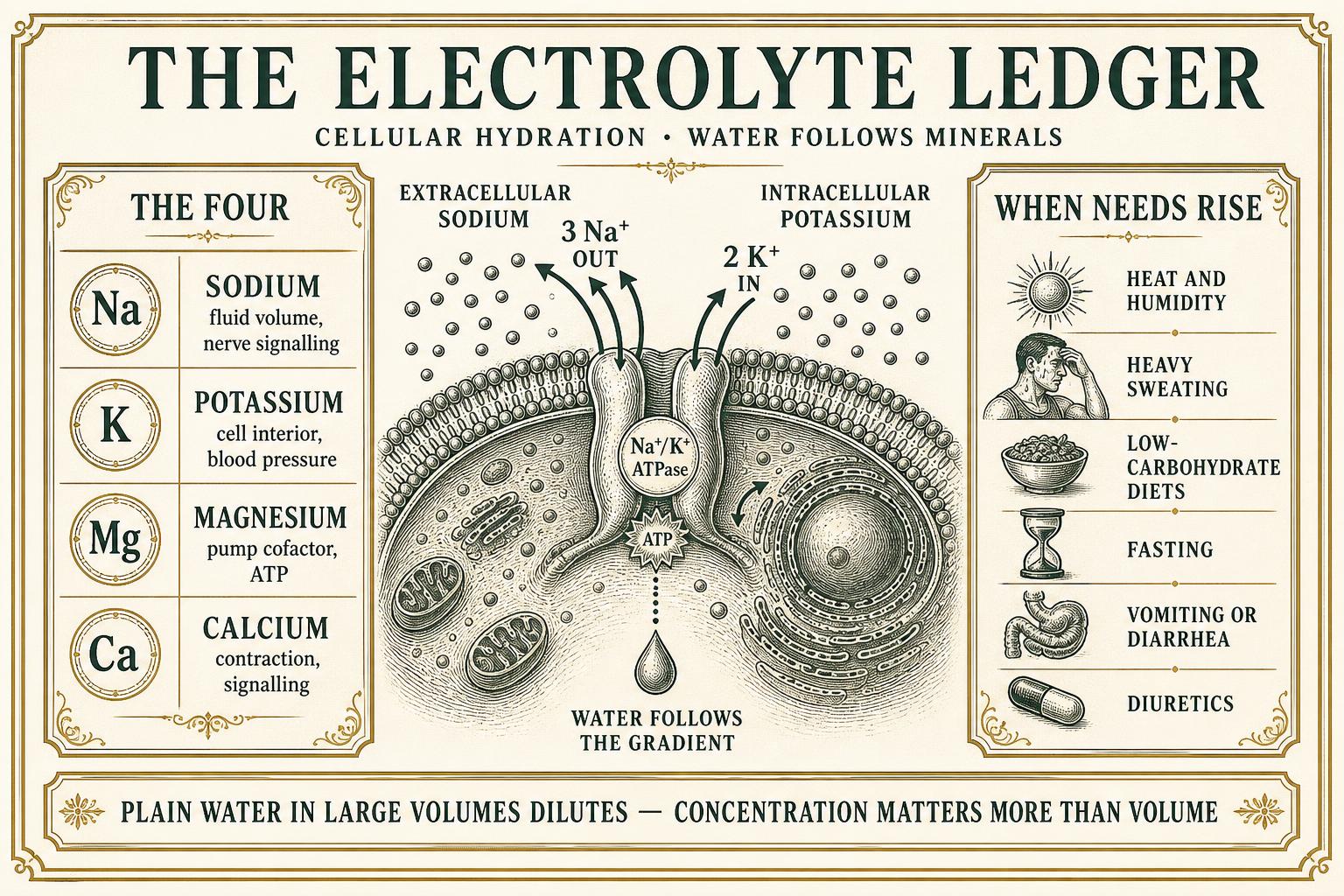
Sodium is the primary extracellular osmolyte; potassium is the primary intracellular one. The gradient between them drives nerve and muscle function.
The Na⁺/K⁺-ATPase pump consumes roughly 20–30% of resting cellular ATP maintaining that gradient.
Sweat sodium losses range from about 200 to over 2,000 mg per liter and are largely genetically determined.
Persistently clear urine with frequent urination usually signals inadequate electrolytes, not excellent hydration.
The Primer
Why minerals decide where water goes
Sodium holds water in the space outside cells — blood volume and interstitial fluid. Potassium holds water inside cells. Magnesium and chloride support the enzymes and channels that maintain the arrangement. Drinking plain water lowers extracellular sodium concentration, and the kidney's response is to excrete the excess water to protect that concentration.
The functional result: more trips to the bathroom, no improvement in how hydrated the tissue actually is.
Signals of an electrolyte problem rather than a water problem
Cramping during or after exercise, dizziness when standing quickly, headaches later in the day, salt cravings, heart palpitations at rest, fatigue that worsens with sweating, and pale or colorless urine passed very frequently. Low-carbohydrate diets, sauna use, hot climates, coffee and alcohol intake, and endurance training all increase mineral loss.
A reasonable baseline
For most sedentary people, eating whole foods with visible salt and plenty of potassium-rich plants covers it. For anyone sweating substantially — heat, hard training, sauna — or eating low-carbohydrate, deliberate replacement matters: sodium in the 3–5 g range daily (roughly 7.5–12 g salt), potassium 3,500–4,700 mg mostly from food, and magnesium 300–400 mg.
Kidney disease, heart failure, and blood-pressure medications change these numbers. Those situations need individual medical guidance, not general targets.
The Deep Dive
The sodium-potassium gradient as an energy cost
Na⁺/K⁺-ATPase moves three sodium ions out and two potassium ions in per ATP hydrolyzed, maintaining the electrochemical gradient that underlies membrane potential, action potentials, secondary active transport of glucose and amino acids, and cell volume regulation. It accounts for an estimated 20–30% of basal metabolic rate — closer to 60–70% in neurons.
This reframes electrolyte status as a bioenergetic variable. Disrupted gradients mean more ATP spent on maintenance and less available for work, which is one mechanistic path from mineral insufficiency to genuine fatigue.
Tier II · Members only · Free
Continue into the deep dive
Tier I is free and always open. Tier II — the full mechanisms, dosing detail, nuance, and citations — unlocks with a free Vital Codex membership.
- Every Tier II deep dive across all hubs
- Saved reading progress across articles
- Member knowledge modules and their quizzes
- The Dispatch, if you opt in
Frequently asked
Is clear urine a good sign?
Not necessarily. Consistently colorless urine with frequent voiding often means water intake is outpacing electrolyte intake. Pale straw is the reasonable target.
How much salt is safe?
For people with normal kidney function and blood pressure, intakes around 3–5 g sodium daily sit in the range associated with lowest cardiovascular risk in large cohort analyses. Hypertension, kidney disease, and heart failure change that entirely and require individual guidance.
Do I need an electrolyte drink?
Only if losses are meaningful — heat, heavy sweating, prolonged exercise, low-carbohydrate eating, or illness with fluid loss. Otherwise food-based sodium, potassium, and magnesium are sufficient and cheaper.
Why do I cramp even though I drink plenty of water?
Cramping is more often a sodium and magnesium issue than a water issue, and drinking more plain water can worsen it by further diluting extracellular sodium.
Continue exploring: Metabolism — Glucose variability, insulin sensitivity, and substrate flexibility.
Explore Metabolism