Berberine is a plant alkaloid found in goldenseal, barberry, and Oregon grape root. In randomized trials it lowers fasting glucose and HbA1c by amounts that overlap the low end of metformin's effect — which is why the "nature's metformin" label stuck, and why the comparison is also overstated.
The honest summary: a compound with genuine glycemic data, poor absorption, meaningful gut side effects, and a drug-interaction profile that matters more than most supplement labels admit.
Contents(12 sections)
Key takeaways
Pooled randomized trials show berberine reduces fasting glucose and HbA1c in people with type 2 diabetes and metabolic syndrome.
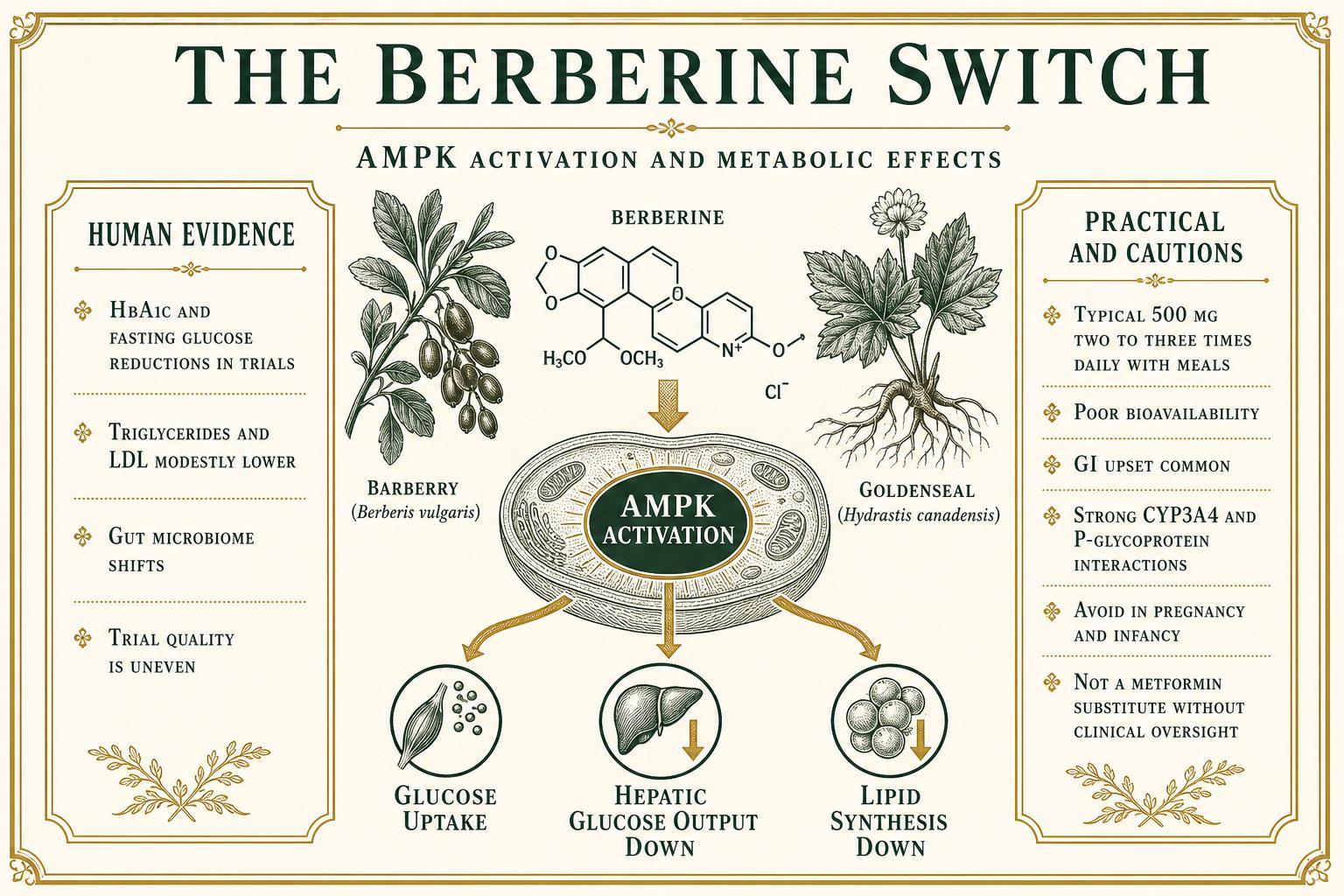
The common trial dose is 500 mg two to three times daily, taken with meals.
Oral bioavailability is under 1%; much of the effect appears to be mediated in the gut rather than systemically.
It inhibits CYP3A4 and P-glycoprotein, so it can raise blood levels of many prescription drugs.
It is not a replacement for prescribed glucose-lowering therapy, and it is contraindicated in pregnancy and nursing.
The Primer
What it appears to do
Berberine activates AMPK, the cellular energy sensor that switches cells toward glucose uptake and fat oxidation. Downstream, that means more glucose pulled out of the bloodstream by muscle, less glucose manufactured by the liver, and improved insulin sensitivity.
Trials also show modest reductions in triglycerides and LDL cholesterol, which is a separate mechanism involving hepatic LDL receptor expression.
Where it fits
Berberine is best understood as a support tool for someone already doing the structural work — resistance training, walking after meals, reducing refined carbohydrate density — not as a substitute for it. It does not repair the underlying condition; it improves the numbers while the underlying condition is being addressed.
Practical use and side effects
The standard approach is 500 mg with meals, two or three times a day, starting at one dose daily and increasing over a week or two. Gut side effects are the limiting factor for most people: cramping, diarrhea or constipation, and nausea. Taking it with food and building the dose slowly reduces both.
Anyone on prescription medication should clear it with a pharmacist first. That is not boilerplate caution — the interaction mechanism is specific and well documented.
The Deep Dive
The trial evidence
Meta-analyses of randomized controlled trials in type 2 diabetes report reductions in fasting plasma glucose of roughly 0.5–1.5 mmol/L and HbA1c reductions in the range of 0.5–0.9 percentage points versus placebo, with effects on triglycerides and total cholesterol as secondary findings. Head-to-head trials against metformin have generally found comparable glycemic effect at 1,500 mg/day berberine versus 1,500 mg/day metformin — but these trials are mostly small, often conducted in single centers in China, and of short duration (8–16 weeks). The effect estimate is real; the confidence interval around it is wider than supplement marketing implies.
No trial has followed berberine long enough to report cardiovascular or mortality endpoints, which is precisely where metformin's evidence base is strongest. The comparison is metabolic, not outcome-based.
Tier II · Members only · Free
Continue into the deep dive
Tier I is free and always open. Tier II — the full mechanisms, dosing detail, nuance, and citations — unlocks with a free Vital Codex membership.
- Every Tier II deep dive across all hubs
- Saved reading progress across articles
- Member knowledge modules and their quizzes
- The Dispatch, if you opt in
Frequently asked
Is berberine the same as metformin?
No. It produces overlapping glycemic effects through partially shared mechanisms (AMPK activation, reduced hepatic glucose output), but metformin has decades of cardiovascular and mortality outcome data that berberine does not.
How long until it works?
Fasting glucose typically shifts within two to four weeks. HbA1c reflects roughly three months of glycemic average, so allow 12 weeks for that marker.
Can I take it with metformin?
Possibly, but only with medical supervision — the glucose-lowering effects are additive and hypoglycemia is the realistic risk.
What if it wrecks my digestion?
Reduce to a single 500 mg dose with the largest meal, or try dihydroberberine at a lower dose. Persistent intolerance after dose reduction is a reason to stop.
Continue exploring: Metabolism — Glucose variability, insulin sensitivity, and substrate flexibility.
Explore Metabolism