A hundred years ago, dairy intolerance was practically unheard of. Human biology has not changed in a century. The milk has — and the body is often rejecting industrial, processed dairy rather than dairy itself.
Contents(9 sections)
Key takeaways
A1 beta-casein from Holstein cows releases BCM-7, which can mimic lactose-intolerance symptoms.
Jersey, Guernsey, goat and sheep milk produce A2 beta-casein.
Kefir and aged cheeses are naturally pre-digested by fermentation.
Grass-fed dairy carries more CLA, omega-3s and fat-soluble vitamins.
Raw milk carries food-poisoning risk; high-risk groups should choose low-temperature pasteurized milk.
The Primer
The Deep Dive
The A1 vs. A2 Beta-Casein Reality
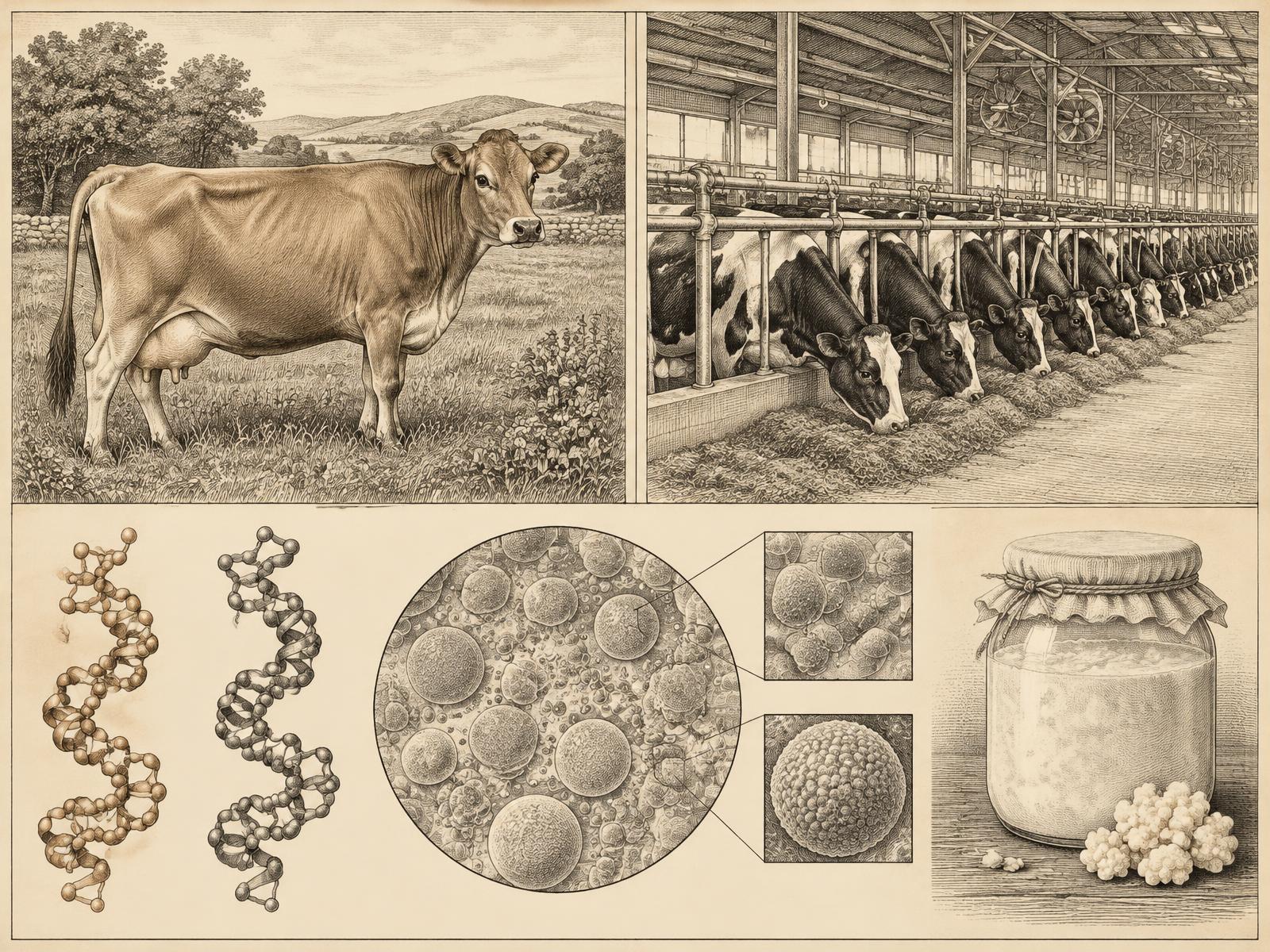
The primary driver of modern "lactose intolerance" symptoms is frequently not lactose at all, but an inflammatory reaction to A1 beta-casein. Over the last century, the dairy industry heavily favored the Holstein cow for high milk yield. Holsteins predominantly produce A1 beta-casein.
During human digestion, A1 beta-casein is cleaved to release beta-casomorphin-7 (BCM-7), an exogenous opioid peptide. Frontier gastroenterological research demonstrates that BCM-7 binds to opioid receptors in the gut, triggering localized inflammation, delaying gastrointestinal transit time, and increasing intestinal permeability ("leaky gut"). This inflammatory cascade perfectly mimics the bloating, gas, and discomfort of lactose intolerance.
Tier II · Members only · Free
Join Vital Codex free
Unlock every Tier II deep dive, save your reading, and open the member knowledge modules. Free, no card, no paywall.
The Dispatch is a separate weekly email. Your membership works with or without it.
Frequently asked
Is A2 milk easier to digest?
A2 milk does not yield BCM-7 on digestion, and many people who react to regular milk find it gentler.
Is raw milk safe?
Raw milk can carry harmful bacteria. Pregnant women, children, adults over 65 and people with weakened immunity should choose low-temperature pasteurized milk; others should buy only from licensed, tested farms.
Who must avoid all dairy?
Anyone with a diagnosed IgE-mediated cow's milk protein allergy. Disclaimer: This information is for educational purposes only and does not constitute medical advice. Individuals with a diagnosed, IgE-mediated cow's milk protein allergy (CMPA) must avoid all dairy. Always consult a qualified healthcare practitioner before making significant dietary changes, especially when sourcing raw dairy, to ensure safe, reputable farming practices.
Continue exploring: Nutrition — Protein sufficiency, micronutrient density, and food quality.
Explore NutritionThe Codex Dispatch
More on Nutrition, one email a week
One considered email each Sunday: research translation, no hype, no supplement pitches. Separate from membership — unsubscribe anytime.